Building an Online Community Your Clients Will Love

Coachful
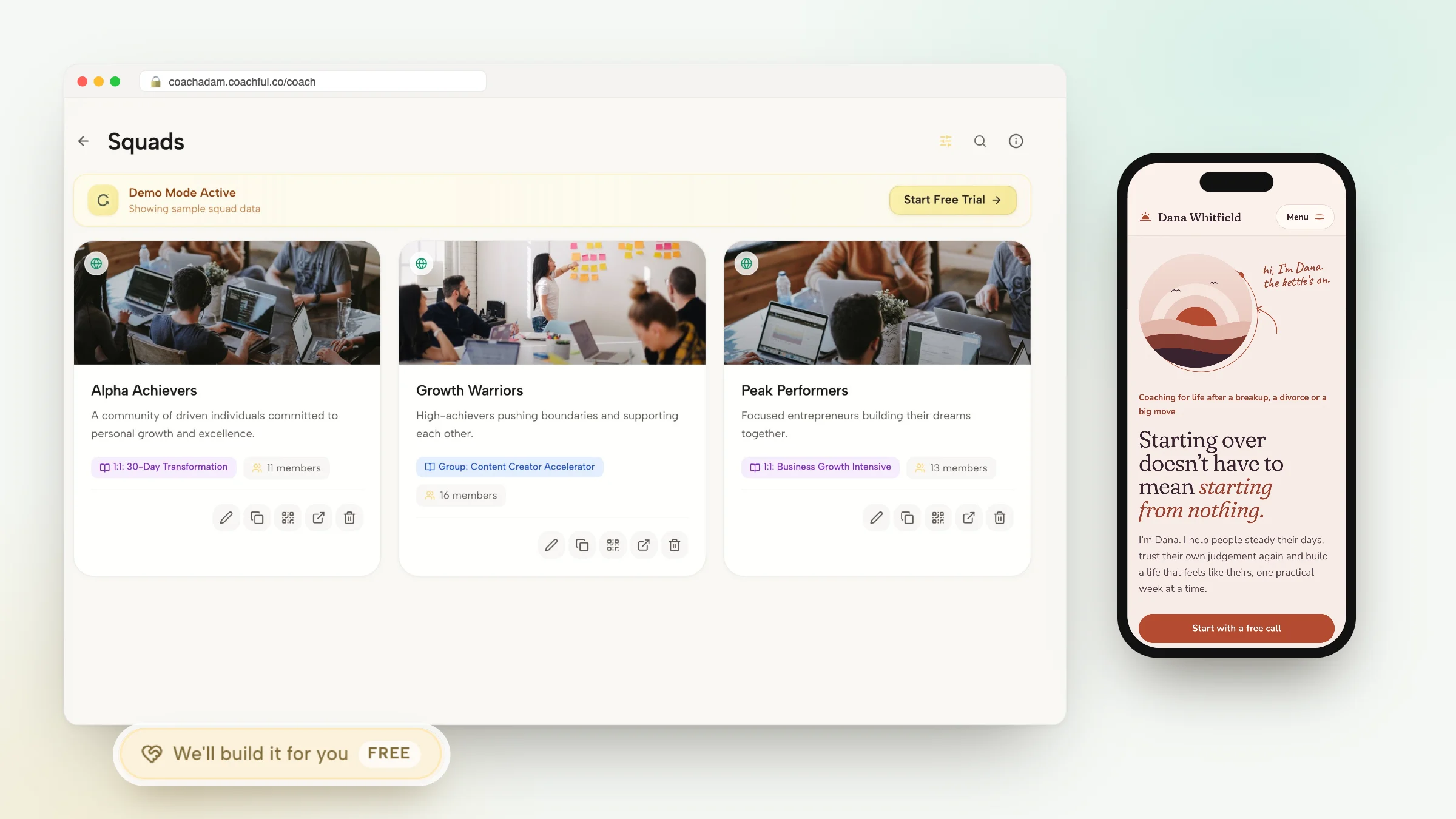
So, you've been thinking about building an online community for your clients. It's a great idea, but I bet the doubts started creeping in almost immediately.
“Where do I even start? How is this different from a Facebook group? What if I pour all this energy into it and it’s just... crickets?”
These are the exact thoughts that stop most coaches from creating what could be their single most powerful asset. Let’s get one thing straight right away: we're not talking about starting another time-sucking social media group. We're talking about building an essential part of your coaching ecosystem. The goal isn't a vanity metric like member count; it's to create a space so valuable to your clients' journey that they can't imagine getting results without it.
This requires a big mental shift. You have to stop thinking like a content creator and start acting like a community architect. Your job is to design a self-sustaining environment where real support, accountability, and transformation happen—often without you even needing to be there.
The Blueprint for a Thriving Coaching Community
Let's walk through how to build a space that actually works, one that energizes you and your clients instead of draining you.
Define Your Community’s “Big Why”
Before you look at a single platform or feature, you have to nail this one question: Why should this community exist?
A vague mission like "a place for my clients to connect" is a guaranteed recipe for a ghost town. Your community’s purpose has to be specific, compelling, and directly tied to the results your clients are paying you to help them achieve.
Let’s ditch the generic goals. Here are a few powerful "Big Whys" to get you thinking:
- For a career coach: "A private space for mid-level managers to workshop real-time leadership challenges and swap peer-tested strategies for navigating tricky corporate politics."
- For a wellness coach: "An accountability hub where busy moms share daily non-scale victories, post their go-to healthy meal-prep hacks, and find a shot of motivation on the tough days."
- For a business coach: "An exclusive network for first-time founders to get rapid-fire feedback on their pitches, swap high-value resources, and find collaborators for their next launch."
See the difference? Each one is laser-focused on a tangible outcome and a specific action. This clarity becomes your North Star, guiding every decision you make, from the content you share to the conversations you spark.
Architecting for Engagement from Day One
That fear of "what if nobody talks?" is completely valid. But here's the secret: low engagement is a symptom of poor design, not a lack of interest from your members.
An active, vibrant community doesn't happen by accident. It's architected. You have to build a structure that naturally invites and rewards participation. This is where the difference between a generic social media group and a purpose-driven coaching hub really comes into focus. To see it in practice, browse a few of the best online coaching communities and note how they invite participation.
The old way of just throwing people into a group and hoping for the best is dead. The modern approach is to build a structured, purpose-driven hub that has a clear function within your program.
From Generic Group to Purpose-Driven Hub
| Outdated Model ('The Social Group') | Purpose-Driven Model ('The Coaching Hub') |
|---|---|
| Vague purpose, like "networking." | A clear, outcome-oriented mission. |
| Content-driven (coach posts, members consume). | Connection-driven (members interact and support). |
| Relies on the coach to start every conversation. | Designed with prompts that spark member-led chats. |
| Measures success with vanity metrics (likes, members). | Measures success with member progress & outcomes. |
| Becomes another distraction for members to scroll. | A focused tool that helps members get results. |
| Feels like a chore for the coach to manage. | A self-sustaining asset that runs with minimal effort. |
Making this shift is about moving from a passive content feed to an active, collaborative workspace. Your community should feel less like a public forum and more like a private workshop where everyone is rolling up their sleeves and working toward a shared goal.
And this isn't just a hunch. The market for these kinds of intentional online spaces is booming. The digital online community platform market is projected to skyrocket from $26.2 billion in 2026 to an incredible $119.6 billion by 2035. This explosive growth is happening because businesses and coaches are finally realizing that purpose-built communities create loyalty and results that social media just can't touch. You can dig into the trends and see how group programs are tapping into this boom.
Key Takeaway: A thriving community isn't built on hope. It's built on a rock-solid foundation of purpose, clear member outcomes, and a structure that makes it incredibly easy and rewarding for people to connect and contribute.
Choosing the Right Platform for Your Community
"Should I just start a Facebook Group? What about Slack? Or do I need one of those fancy dedicated platforms?"
This is the question that trips up so many coaches. It feels like a massive, permanent decision, and the fear of getting it wrong can lead to total paralysis.
But let's flip the script. Instead of getting bogged down in what a platform can do, I want you to ask a much simpler question: "What do my members actually need to succeed?" The tech is just the container; the connection and transformation you build inside it are what really matter.
Your choice here sends a message. Are you building a community to chase vanity metrics, or are you creating a space laser-focused on getting your clients real, lasting results?

As you can see, a true commitment to client change is the starting point that informs every other decision, especially your choice of platform.
Public Platforms vs. Branded Spaces
The first big fork in the road is deciding between a "borrowed" space (like a social media group) and a dedicated, branded space that you own and control. Each has its pros and cons, and there's no single right answer.
Borrowed Spaces (Facebook Groups, Slack, Discord)
- The upside: They're familiar, free, and incredibly easy to join. Your members are probably already logged in, so you don't have to convince them to adopt a new tool. The friction is almost zero.
- The downside: You're essentially building your house on rented land. You're at the mercy of algorithm changes, your members are constantly bombarded with distractions, and your branding gets lost in the noise. For clients sharing sensitive info, privacy can be a major concern.
Branded Spaces (Dedicated Community Platforms)
- The upside: You control the entire experience from top to bottom. No ads. No competing notifications. You can design the space to perfectly mirror your coaching curriculum, creating a focused, premium environment.
- The downside: These platforms typically have a monthly fee. You'll also have to guide your members through learning a new piece of software, which can be a small hurdle for some.
A little voice in your head might be saying, "But everyone's on Facebook, it's just easier." My question back to you is: easier for whom? Is an environment where your coaching content is fighting for attention next to cat videos and political rants truly easier for your clients who need to focus?
Aligning Platform Features with Client Needs
Instead of getting dazzled by a long list of features, let's ground this decision in what will actually help your members. Your platform's features should directly support the specific actions your clients need to take to get the transformation they paid for.
Think about it in real-world terms:
- A health coach needs to make healthy habits visible and easy to share. Their ideal platform might have dedicated channels for
Recipe Swaps,Daily Movement Check-ins, and a way to privately track progress. - A business coach working with entrepreneurs is all about collaboration and celebrating momentum. They'd want a space with channels for
Weekly Wins,Resource Sharing, and maybe even the ability to create smaller, privateAccountability Pods. - A life coach helping clients build confidence needs to foster a safe, supportive atmosphere. They might look for features like a
Kudos Boardfor peer-to-peer encouragement or a thread for sharing vulnerable stories without fear of judgment.
See how the client's journey dictates the structure? Your community should feel like a natural extension of your coaching, not just another login to remember. If you're ready to dig into specific options, our guide on the best online coaching platforms breaks down the top contenders to help you match features to your unique style.
The Final Litmus Test for Your Decision
Once you've narrowed it down to a couple of contenders, run them through these three final gut-check questions before you pull the trigger.
- Does it reduce distraction? Your community's home should be a sanctuary for focus, not another source of cognitive load with endless ads and notifications.
- Is it simple enough for my least tech-savvy client? If people struggle to log in or find what they need, they will quietly disengage. Always prioritize ease of use over a bloated feature list you'll never touch.
- Does it integrate with my existing workflow? Think about how you already share files, schedule calls, or track progress. The right platform should feel like it snaps right into your process, saving you from future administrative headaches.
At the end of the day, this isn't about finding the trendiest tool. It’s about choosing a home for your people—a place that feels safe, supportive, and intentionally designed to help them win.
Launching and Onboarding with Intention
That pre-launch anxiety is real, isn't it? It feels like throwing a huge party, sending out all the invitations, and then spending the entire night peeking through the curtains, just hoping someone—anyone—shows up.
Your inner dialogue is probably running wild: "What if I open the doors and it's just crickets? What if I'm the only one posting for weeks?"
This fear keeps so many great coaches stuck. But a successful community launch isn't about hope; it's about strategy. We can sidestep that anxiety by building genuine excitement and momentum before the doors even swing open.

The Power of a Founding Members Launch
Instead of a big, splashy public launch that feels incredibly high-stakes, try starting with a "Founding Members" or beta launch. This is a small, invitation-only opening for a hand-picked group of your most trusted clients or loyal followers.
This approach instantly flips the script from a public spectacle to an exclusive opportunity. It's not just a clever marketing gimmick; it's a brilliant way to lay the foundation for a thriving community. Your founding members essentially become your co-creators.
Here’s why this works so well:
- It creates exclusivity. People are drawn to being part of an inner circle. An invitation to become a "Founding Member" makes them feel valued and important right from the start.
- It generates priceless feedback. This initial group gives you a safe space to test your ideas, see what conversation prompts actually land, and iron out any tech glitches before you open up to a wider audience.
- It builds your core culture. These first members are, by their very nature, your biggest fans. Their early enthusiasm and active participation will set the tone for every single person who joins after them.
Consider offering them a special lifetime price or some extra one-on-one time in exchange for their active participation and honest feedback during that first month. This turns your launch from a high-pressure event into a collaborative workshop.
Master the First 48 Hours
Once the doors are open, the clock is officially ticking. A new member's experience in the first 48 hours is the single best predictor of their long-term engagement. This is your moment to combat the all-too-common "join and ghost" phenomenon.
If a new member logs in and feels overwhelmed, confused, or invisible, they will quietly back away and probably never return. Your onboarding has to be intentional, simple, and designed to give them an immediate sense of belonging—and a quick, easy win.
You might be thinking, "I don't have time to hand-hold every new person." That's the beauty of a system. A great onboarding process is automated but feels personal, guiding members to engagement without requiring your constant attention.
Think of yourself as a great party host. You wouldn't just open the door and vaguely point toward the kitchen. You'd greet your guests warmly, introduce them to a few people, and offer them a drink. The same principle applies here. An effective onboarding system is vital, and for coaches juggling it all, finding the right client management software with automated workflows can be a total game-changer.
Your Essential Onboarding Checklist
Your mission is to make new members feel seen, heard, and valued from the second they arrive. A scattered approach won't cut it. You need a clear, repeatable process that every new member goes through.
Here is a simple but powerful checklist to get you started:
- The Personalized Welcome: As soon as they join, have an automated but warm welcome message or email ready to go. Use their first name and clearly state the top three things they should do first to get settled.
- The Quick Orientation: Create a short welcome video—keep it under 3 minutes! Pin this to the top of your community. In it, personally welcome them, show them exactly where to find key resources, and briefly explain the community's core purpose.
- The "First Win" Prompt: This is the most crucial step of all. Your welcome sequence should funnel every new member to a specific "Introductions" thread. Here, you give them a simple, non-threatening prompt that encourages immediate participation.
Don't just say, "Introduce yourself!" That’s too vague and can feel intimidating. Instead, use a structured prompt that’s easy to answer.
- For a business coach: "Share your name, your business, and one big goal you're working toward this quarter."
- For a health coach: "Tell us your name and one small, healthy habit you're committing to this week."
This simple action breaks the ice, gets their voice into the room, and gives you and other members an immediate chance to engage with them. This is how you transform a passive lurker into an active contributor right from day one.
Crafting Engagement Rituals That Build Connection
So, you’ve launched your community and new members are starting to trickle in. Now comes the thought that keeps every coach and program manager up at night: “How do I keep this going without being online 24/7? Do I just have to ask questions all day?”
Forget that. A thriving community doesn't run on your constant intervention. It runs on engagement rituals—consistent, branded, and predictable activities that members can look forward to, rely on, and eventually, even start leading themselves.
These rituals are the heartbeat of your community. They turn a quiet group into a vibrant hub of connection and support. To see rituals like these in a live space, take a tour of Coach Corner, Coachful's community for coaches.

This isn’t about just posting more; it’s about creating a sustainable rhythm that adds real value without burning you out. When members know what to expect and when, they show up ready to engage.
The Psychology Behind Predictable Engagement
Why do rituals work so well? It really just comes down to human psychology. We crave predictability and a sense of belonging.
When a member knows that every Wednesday is for celebrating wins, it lowers the mental barrier to participating. They don't have to think of something brilliant to say; they just have to share their win. It’s that simple. This consistency builds trust and helps form positive habits, making engagement feel automatic and rewarding instead of like a chore.
And people are hungry for this kind of connection. A staggering 64% of people are visiting online communities more often than they did a few years ago. This shift really picked up steam in 2020, with 44% of users saying these digital spaces became more important to them, especially during major life changes.
You can dig deeper into this trend and see why users are now sharing 83% more personal information in these trusted spaces by checking out recent findings on the online community platform market.
Your Playbook of Proven Engagement Rituals
The good news is you don’t need to reinvent the wheel. The real key is to choose a few rituals that directly support your coaching program's goals and what your members actually need. I always recommend starting with just two or three, getting them running smoothly, and then adding more later if you feel the need.
Here are some specific, battle-tested ideas you can adapt right away:
- Mindset Monday: Kick off the week with a prompt that encourages reflection. Instead of a generic "What's your goal?" ask something with more depth, like, "What's one limiting belief you're committed to challenging this week?" This immediately sets a tone of introspection and purpose.
- Wins Wednesday: Create a dedicated thread where members can share any win, big or small. This simple ritual is a magnet for positivity and peer-to-peer encouragement. More importantly, it trains your members to constantly look for progress, which is a core part of any successful coaching journey.
- Feedback Friday: Set up a space for members to get quick, targeted feedback on something specific. A business coach's community might have a "Pitch Practice" thread, while a wellness group could run a "Recipe Review" space. This provides instant, tangible value they can’t get anywhere else.
A Coach's Inner Dialogue: "This sounds like a lot of work to set up every single week." The secret here is automation and templating. You can use your platform's scheduling tools to set these posts up weeks or even months in advance. Create a simple template for each ritual, and it literally becomes a 5-minute task to get them all queued up.
Advanced Rituals for Deeper Connection
Once you've got a solid weekly rhythm going, you can start to layer in deeper, more interactive rituals. These are the things that create massive value and forge much stronger bonds between your members. They often require more of your direct involvement, but believe me, the impact is huge.
Think about introducing one of these on a monthly or bi-weekly schedule:
- Monthly "Hot Seat" Coaching: Select one member to receive a live, 20-minute coaching session from you right in front of the group. The member gets incredible personalized attention, and everyone else learns from watching the process unfold. It's a high-value event that showcases your expertise.
- Peer Accountability Pods: This single tactic can skyrocket your client results. I've seen it time and again. Just manually group 3-4 members into small "pods" that meet privately once a week to check in on their goals. You provide the structure (a simple check-in template), and they provide the accountability for each other.
- Expert Q&A Sessions: Bring in a guest expert—or feature yourself as the expert—for a live Q&A on a specific topic that's highly relevant to your members. This breaks up the routine and firmly positions your community as a go-to source for exclusive knowledge.
Ultimately, your goal is to build a rich, multi-layered engagement calendar. A member might pop in on Wednesday to share a quick win, then show up for a deep-dive Q&A the following week. This variety caters to different personalities and keeps the community feeling fresh and dynamic.
Measuring Community Health and Scaling Your Impact
As a busy coach, you live and die by results. Your time is your most precious resource, and every minute you invest has to deliver a real return, whether for your clients or your business.
So when it comes to your community, there's probably a nagging voice in your head asking, "Is this actually working? Or is it just a feel-good time sink?"
This is where we need to look past vanity metrics like total member count or the number of "likes" on a post. Honestly, those numbers don't pay the bills. We have to measure what truly moves the needle: client transformation and business growth. This is how you prove your community isn't just a bonus feature—it’s a powerful asset.
Key Metrics That Actually Matter
Don't get bogged down trying to track a dozen different things. A simple, focused dashboard is all you need. Concentrate on a few key health indicators that give you a clear, honest snapshot of how deep the engagement really is.
I'd suggest starting with these three:
Active Member Rate: What percentage of your members are actually posting, commenting, or reacting each week? A healthy rate—30% or more is excellent—shows your community has become a regular part of your clients' lives, not something they just check occasionally.
Answered Questions Ratio: Of all the questions people ask, how many get a reply from another member (not just you)? This is a fantastic indicator of peer-to-peer support and tells you if you’re building a self-sustaining culture.
Connection Density: Are the same five people driving all the conversations, or are interactions spread out between many different members? The more distributed the connections, the stronger and more resilient your community becomes.
It's easy to get lost in the data. Just remember the real question behind all the numbers: "Is my community helping my clients get better results, faster?" If your metrics point to 'yes,' you're on the right track.
Connecting Community to Business Outcomes
Now for the most important part: tying those health metrics to your bottom line. This is where you calculate the real ROI of all your community-building work.
You can start by looking for correlations in your client data over the last six months. Ask yourself questions like:
- Do my most active community members also have the highest client retention rate?
- Are the members who regularly post in "Wins Wednesday" more likely to renew their contracts?
- Do members who join accountability pods tend to upsell into my higher-ticket programs later on?
When you can draw a straight line from community activity to increased client lifetime value, your community shifts from a "nice-to-have" into a proven growth engine. This becomes a crucial piece of your long-term strategy, especially if you're thinking about building a membership website around your core coaching offer.
Knowing When and How to Scale
As your community grows, you'll inevitably hit a point where you simply can't do it all yourself. And that’s a great problem to have! It's a clear sign you've built something with real momentum.
Your first scaling move is often bringing on a moderator. I always recommend looking for a "super-member"—someone who is already positive, helpful, and naturally embodies your community's values. They can take over welcoming new members and facilitating daily rituals, which frees you up to focus on high-level coaching and strategy.
Next, start treating your community like a built-in focus group. Got an idea for a new program? Beta-test it with a small cohort of your most engaged members. Their feedback will be pure gold, and they’ll feel honored to be part of the creation process, turning them into your most passionate evangelists when you're ready to launch.
This kind of strategic approach is exactly why the online community platform market, valued at $2.0 billion in 2024, is projected to hit $6.0 billion by 2032. Businesses are catching on that these engaged hubs aren't just chat rooms; they are scalable assets that directly meet the demand for professional networking and better support. You can discover more insights about these market trends at FutureDataStats.com.
Lingering Questions from Coaches on the Ground
Even with the best roadmap, you’re bound to hit a few bumps or have questions pop up as you get your community off the ground. That’s perfectly normal. Let’s walk through some of the most common concerns I hear from other coaches so you have clear answers ready to go.
"How Much Time Will This Really Take Me Each Week?"
This is the million-dollar question, isn't it? As a coach, your time is everything, and the last thing you need is another time-sucking task on your plate.
Let’s be realistic. During the launch phase—think the first 4-6 weeks—you should plan on dedicating 3-5 hours per week. This is where you’re setting the tone, personally welcoming every new face, and sparking those initial conversations. You’re front-loading your effort to build momentum.
But here's the good news: once your community gets its sea legs and members start talking amongst themselves, that time commitment drops off a cliff. A healthy, thriving community can easily be managed in just 2-3 hours per week. The goal is to transition from being the creator of every conversation to the facilitator of the space. You'll get there by scheduling content and empowering your most engaged members to step up.
"What's the Best Way to Handle It When Members Disagree?"
Conflict is incredibly rare in a well-run community, but it's always smart to have a game plan just in case. A little prep here goes a long way.
Your best strategy is to be proactive. Have a short, simple set of community guidelines front and center from day one. These aren't about being restrictive; they're about establishing a shared understanding of what respectful, productive conversation looks like.
When a disagreement does bubble up, my advice is always to follow the "private first" rule.
- First, take the conversation out of the public eye. Send a direct message to the people involved instead of calling them out in a public thread. This simple act prevents public shaming and immediately de-escalates the situation.
- Next, anchor your message in the community guidelines, not your personal opinion. You could say something like, "Hey, that last comment felt a bit off from our guideline on constructive feedback. Can we chat about it?"
- This approach takes the personal sting out of the correction. It’s no longer about you vs. them; it's about everyone upholding the shared values of the space we all agreed to.
"Should I Charge for My Community or Make It Free?"
This is a big one, and it hits right at the heart of your business strategy. There are really only three paths you can take, and each one serves a different purpose.
Let's lay them out.
| Model | Best For... | The Big Win | The Catch |
|---|---|---|---|
| Free Community | Building an Audience | Maximum reach and brand exposure at the top of your funnel. | Can attract a lot of low-commitment members, requiring more moderation. |
| Included with Program | Enhancing a Coaching Offer | Dramatically increases the value of your core program and boosts client success. | It’s a value-add, not a direct, separate revenue stream. |
| Paid Subscription | A Standalone Business | Creates a predictable, recurring income stream from your expertise. | Requires a serious, ongoing marketing machine to keep it growing. |
For almost every coach I've worked with, the "Included with Program" model is the undisputed champion.
When you bundle the community with your coaching, it’s not just an "extra"—it becomes a core part of the transformation they’re paying for. This small but powerful shift in positioning skyrockets both engagement and retention because members are already invested. They've put skin in the game.
Trying to run a standalone paid community often means you have to become a full-time marketer for it. And a free-for-all community can quickly become noisy and unfocused. Tying your community directly to your paid program ensures everyone inside is serious, committed, and ready to get results. That creates an incredibly powerful and high-value environment for everyone involved.
Ready to stop juggling tools and build your entire coaching business, community and all, in one place? Coachful gives you the power to manage clients, schedule sessions, and host your private community without the tech headache. Start your journey with Coachful today and create the focused, branded home your clients deserve.