Sole Proprietorship vs S Corp vs LLC: A Coach's Guide

Coachful
Your coaching business finally feels real.
Clients are signing. Renewals are happening. Your calendar is packed, your Stripe notifications are steady, and for the first time, your problem isn't "How do I get clients?" It's "Why does my tax bill feel violent?" and "If one client gets angry, can they come after my house?"
That shift messes with your head. You worked this hard to create freedom, then success hands you a different kind of stress. You start hearing terms like sole proprietorship, LLC, and S Corp, and suddenly it feels like you need a law degree just to keep more of what you earn.
You don't.
You need a clean decision. Not jargon. Not vague internet advice. Not another article written for every business on earth. You're a coach. Your business often starts simple, then gets profitable fast. That means the structure that felt "fine" when you started can become expensive or risky once you're booked out.
If you're still in the early stage, this is part of the natural path from side hustle to company. If you want that context, starting an online coaching business the right way helps frame how the legal and money side catches up with growth.
Your Coaching Business Is Thriving Now What
A coach usually doesn't worry about entity structure on day one. You worry about getting your first paying client, refining your offer, and not sounding awkward on discovery calls.
Then something changes.
You sign a few premium clients. A company brings you in for leadership coaching. One client pays in full for a package. Another refers two friends. Suddenly, money is landing in your account, but it doesn't feel like your money for long. A chunk has to be set aside for taxes. You hear about another advisor getting sued over a client dispute. You realize your business might still be sitting inside your personal identity like it's a hobby.
That's the moment when sole proprietorship vs s corp vs llc stops being a technical question and becomes a personal one.
What successful coaches usually feel at this stage
Some version of this is probably running in your head:
- "I'm making good money, so why do I still feel financially squeezed?" Taxes are usually the answer.
- "I help people, I don't run a risky business." That feels true until a client blames you for an outcome.
- "I don't want to overcomplicate things." Fair. But staying too simple can become the expensive option.
- "I just want the smart setup without turning into a corporate robot." Good news. That's possible.
You don't need the fanciest structure. You need the structure that matches the stage of business you're actually in.
A coach at the beginning needs simplicity. A coach with meaningful profit needs protection and tax planning. A coach building a team needs systems that hold up under pressure. Different stage, different answer.
The real decision underneath the paperwork
You're not choosing between legal acronyms.
You're choosing between three business realities:
- Keep everything tied to you personally
- Separate the business from your personal life
- Separate the business and optimize how the profits get taxed
That's the whole game. Once you understand that, the fog lifts fast.
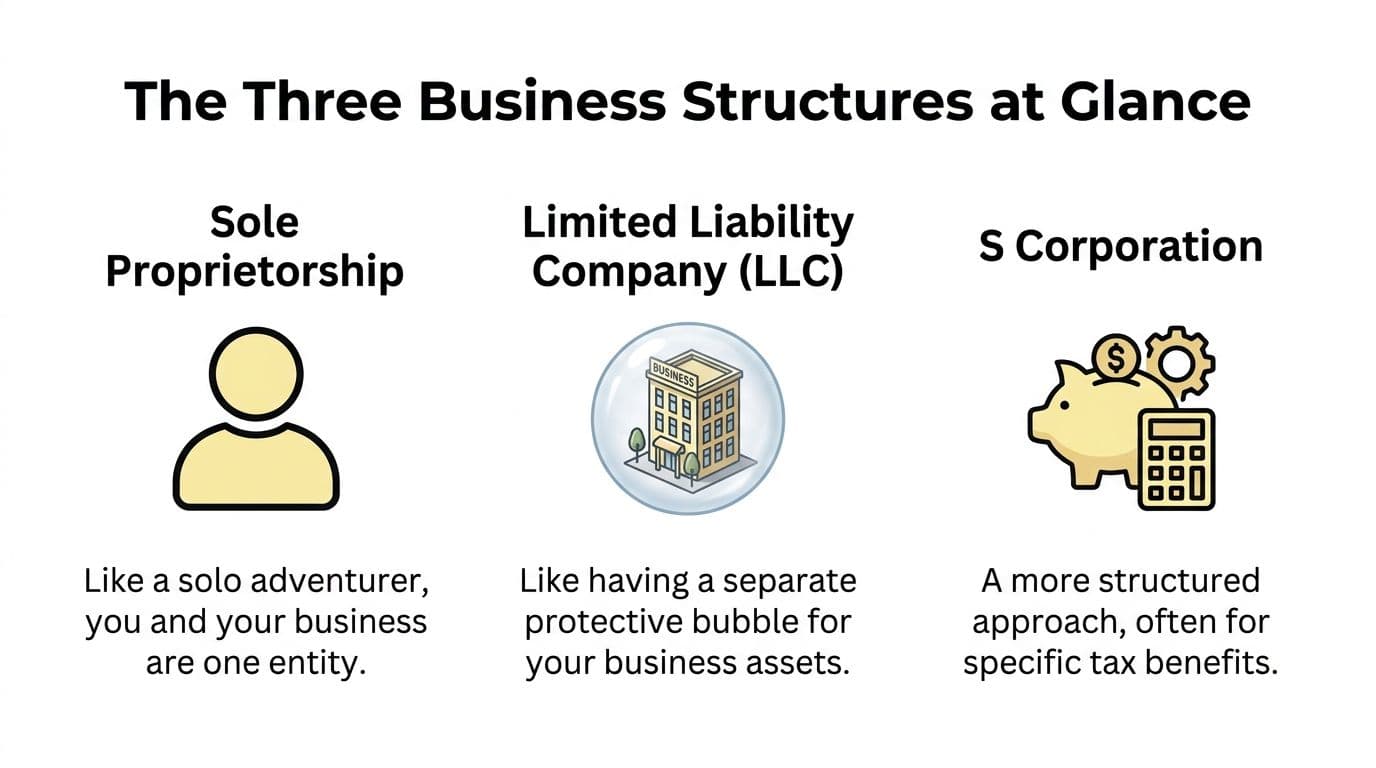
The Three Business Structures at a Glance
Let's strip the jargon out.
A sole proprietorship is you operating as yourself. No legal wall between you and the business.
An LLC is a legal wrapper that separates the business from your personal life.
An S Corp is not really a business type in the same practical sense most coaches think of it. It's usually a tax election layered onto an LLC or corporation so you can change how profit gets taxed.
Here's the visual version first.
Quick comparison table
| Structure | Best analogy | Liability protection | Tax treatment | Setup burden | Ongoing admin |
|---|---|---|---|---|---|
| Sole proprietorship | Your business lives in your personal wallet | None | Profit flows directly to you | Easiest | Lowest |
| LLC | Your business gets its own legal apartment | Yes, if you respect the separation | By default, usually taxed like a sole prop for a solo owner | Moderate | Light |
| S Corp | Your business goes on a stricter tax plan | Yes, when paired with a proper entity and maintained correctly | Part salary, part distributions | Higher | Highest of the three |
What they look like in real coaching life
A sole proprietorship works like this: you get paid, the money is yours, the risk is yours, the taxes are yours. Clean. Fast. Exposed.
An LLC works like this: the business has its own legal identity. Clients contract with the company. Money should move through business accounts. If trouble hits the business, there's a layer between that problem and your personal life.
An S Corp works like this: you keep the liability benefits of a separate entity, but you also change how you pay yourself. Part of the money comes through payroll as salary. The rest can come through distributions, which is where the tax planning opportunity shows up.
The trade-off in plain English
According to Harbor Compliance's entity comparison, a sole prop can start at $0 cost and 0 days, a single-member LLC typically runs $50 to $500 and 1 to 7 days, and an S-Corp formed as a corporation typically runs $100 to $1,000 and 1 to 14 days, plus bylaws and IRS Form 2553 within 75 days of formation if you want the S election. The same source says LLCs usually have lighter maintenance, while S-Corps come with more formal requirements like minutes and stock records.
That same comparison also says a sole proprietorship carries 100% unlimited personal risk, while LLCs and S-Corps cap owner liability at business assets through separate entity status. That's the entire emotional center of this decision for coaches. Simplicity feels good until the business is worth protecting.
If you want an additional side-by-side perspective that includes how these structures compare to a corporation, this C Corp vs S Corp vs LLC Guide is a useful companion.
Practical rule: If your business is making real money and serving real clients, "simple" is no longer the only goal. "Protected" and "efficient" need to join the conversation.
My direct take
For coaches, the default path is usually this:
- Brand-new and testing an offer: sole proprietorship can be acceptable for a short window
- Clients are consistent and contracts matter: form an LLC
- Profit is strong enough that taxes sting: look at S Corp taxation
That's the broad answer. The next question is the one that keeps many coaches up at night.
Understanding Your Liability Shield
Taxes get attention because they're visible. Liability gets ignored because it feels hypothetical.
That's a mistake.
A coaching business can look low-risk right up until a client gets upset, misreads your role, or decides your advice caused a financial or personal setback. Executive coaches, business coaches, health coaches, relationship coaches. Any of them can end up in a dispute.
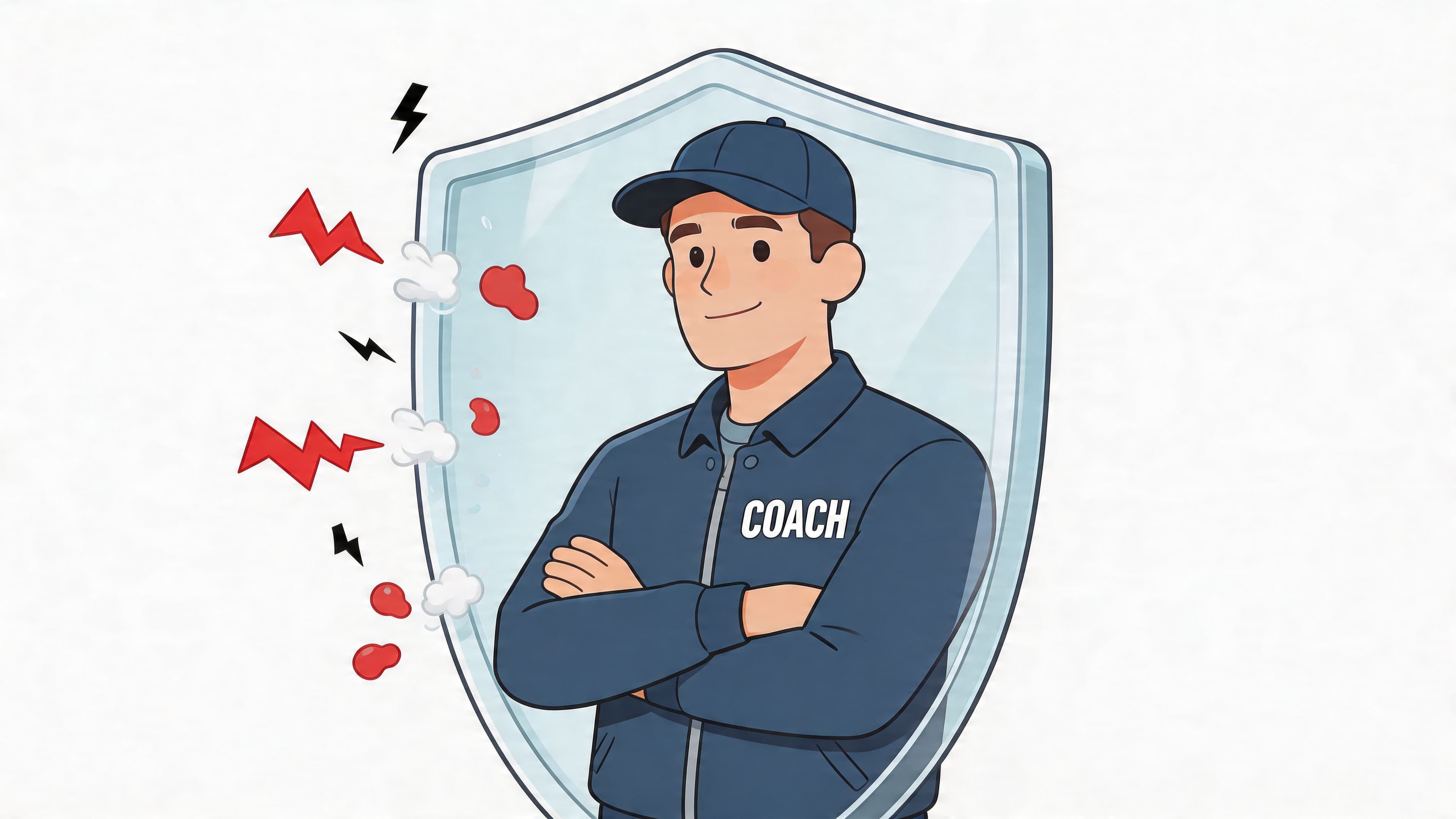
What happens as a sole proprietor
Let's make it concrete.
Say you're an executive coach. A client says your guidance influenced a career move or company decision that blew up. They threaten legal action. If you're operating as a sole proprietor, there is no separate business person standing between you and the claim. You and the business are the same.
That means the attack isn't just against "the business." It's against you.
Your savings matter. Your car matters. Your personal accounts matter. If you own a home, that fear gets very real very fast. You're not just defending revenue. You're defending your life outside the business.
What changes with an LLC or S Corp
With an LLC or an S Corp setup that has been handled properly, the lawsuit is generally against the business entity.
That doesn't mean you become untouchable. It means the legal target changes.
The practical protection looks like this:
- Business assets are in the line of fire first
- Personal assets are generally separated from business liabilities
- Your personal life is less exposed to a business dispute
For a coach, that emotional difference is massive. You can survive a business problem. It's harder to survive a business problem that drags your household into it.
The limit coaches need to understand
A liability shield is not a magic cloak.
It doesn't protect you from everything. If you personally commit fraud, mix business and personal finances carelessly, ignore legal formalities, or act negligently in a way that creates direct personal exposure, you can still create problems for yourself.
Limited liability protects against normal business exposure. It doesn't excuse sloppy behavior.
That means if you form an LLC and then keep using your personal checking account for client payments, sign contracts casually, and treat the company like a nickname instead of a separate business, you're weakening the very protection you paid to create.
How to make the shield real
If you're serious about protection, do these things consistently:
- Use a separate business bank account. Don't run client money through your personal account.
- Sign as the business. Contracts should reflect the company name, not just your personal name.
- Keep clean records. Invoices, agreements, expenses, and payments should all look like business activity.
- Carry insurance too. Entity protection and insurance are not substitutes. They work together.
- Act like the company exists. If you formed it, respect it.
A lot of coaches skip this because they think legal risk belongs to doctors, agencies, or giant firms. It doesn't. It belongs to anyone taking money in exchange for guidance, transformation, or strategic advice.
If you're still asking, "Do I really need this if my clients love me?" the answer is yes. Happy clients and legal protection solve different problems.
The Money Conversation Taxes and Your Take-Home Pay
This is the section most coaches care about first, even if they don't say it out loud.
You don't mind paying taxes. You mind paying more than you legally need to. And once your coaching business starts producing healthy profit, the difference between structures stops being academic. It hits your take-home pay.
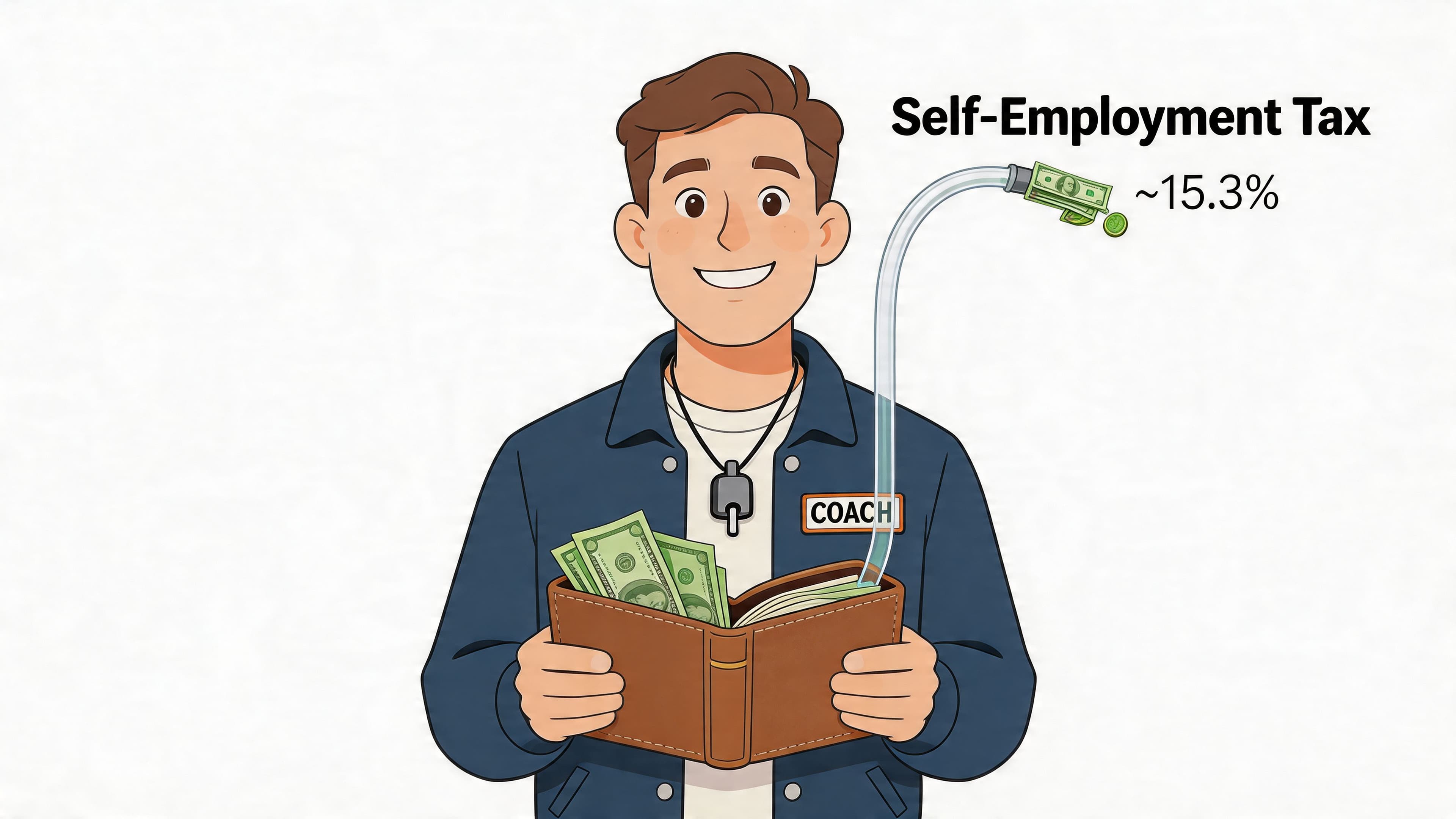
Why sole proprietors feel crushed by taxes
If you're a sole proprietor, or a single-member LLC taxed the default way, your business profit generally gets hit with self-employment tax.
The number that matters here is 15.3%. That's the tax coaches often feel before they fully understand it. It sits on top of income taxes and it applies broadly to your business profit in that setup.
This is why a coach can have a strong year on paper and still feel like cash disappears too fast. The structure is simple, but the simplicity costs money once profit grows.
Where the S Corp creates tax leverage
The appeal of an S Corp is not that it makes taxes vanish. It doesn't.
The appeal is that it changes how your compensation gets classified. Instead of all profit being treated the same, an S Corp owner pays themselves a reasonable salary that goes through payroll, while additional profit can be taken as distributions. Those distributions avoid self-employment tax from that specific angle.
That's the key move.
A detailed breakdown from Fraim CPA on sole proprietorship, LLC, S-Corp, and C-Corp taxation says this strategy typically starts to make sense around $50,000 profit, where the tax savings can outweigh the extra compliance.
A coach example in plain English
Say you're a business coach who's gone from a few monthly clients to a premium offer, a group container, and a corporate workshop or two. You're no longer dabbling. You're profitable.
At that stage, your inner dialogue usually sounds like this:
- "I can handle paperwork if it saves real money."
- "I don't want to do anything sketchy."
- "I want a legal way to stop bleeding taxes."
That's exactly what the S Corp conversation is for. Not tax evasion. Tax classification.
If you're also refining your pricing because your margins are getting tighter than expected, this guide on how to price consulting services pairs well with the entity decision. Price and tax structure affect the same thing. Your take-home pay.
The big-number example that gets coaches' attention
Here's the cleanest hard-number example available.
Fraim CPA's comparison says that for a business with $500,000 in annual profit, a sole proprietorship results in $172,900 in total taxes, including $36,300 in self-employment taxes, while an S-Corp results in $138,800 in total taxes, including $23,000 in payroll taxes. That's a difference of up to $34,100 in annual tax savings through the S-Corp approach, largely because distributions avoid that full self-employment tax treatment. The same analysis shows a C-Corp at $182,200 total after corporate tax and dividend tax are both counted, which is why many owner-operated service businesses don't benefit from that route.
That example matters because it turns the vague promise of "tax savings" into a real business-owner question: how much are you leaving on the table by staying too simple for too long?
If your coaching business is producing serious profit, staying a sole proprietor can become the expensive choice.
Why coaches still shouldn't rush blindly into S Corp status
S Corp taxation has rules.
You need payroll. You need a defensible reasonable salary. You need compliance. You need to stop treating the business like an informal side hustle. That's why the move makes more sense when profits are healthy enough to justify the admin.
Later in the same source analysis, the S Corp isn't framed as the best answer for every tiny business. It's framed as a strong answer once profit reaches the point where the savings beat the hassle.
This walkthrough can help you see how that logic works in practice:
My recommendation on taxes
Here it is, plainly.
- If profit is low and you're early, don't force an S Corp just to appear more advanced.
- If profit is meaningful and self-employment tax is stinging, stop ignoring the S Corp conversation.
- If you're profitable and still operating casually, fix that. You're likely paying for the privilege of being disorganized.
For most successful solo coaches, the strongest path is often LLC first, then S Corp election when profit supports it. That gives you protection early and tax efficiency later.
Formation and Ongoing Admin What Is Really Required
Many coaches freeze at this point.
You hear "entity formation" and imagine legal packets, government confusion, and hours on hold with people who hate you. In reality, it isn't that dramatic. The admin is real, but it's manageable if you know what belongs on your plate and what should be handed off.
What each option actually requires
Here's the plain version.
Sole proprietorship
This is the path of least resistance. You start operating. In some cases you may use a DBA, but the point is that there isn't much formal setup.
What you gain is speed. What you give up is separation.
Typical reality for a coach:
- Fast start
- Minimal paperwork
- No real liability barrier
- No built-in tax optimization
LLC
This is the clean professional upgrade for many solo coaches.
Typical LLC setup usually includes:
- File formation documents with your state
- Create an operating agreement
- Open a dedicated business bank account
- Update contracts, invoices, and payment systems to the company name
- Stay current on any annual report requirements
The admin burden is reasonable. It feels much bigger before you do it than after.
A good practical companion once your entity is set up is a proper agreement process. Using a tool like the Coachful contract generator helps coaches stop relying on messy proposal emails and handshake-style arrangements.
S Corp
At this point, the business starts acting more like a real company, because it is one.
Typical S Corp-related requirements often include:
- Form the entity if you haven't already
- File the S election on time
- Run payroll
- Keep stronger records
- Respect formalities consistently
The admin trade-off most coaches can live with
The mistake is thinking "more admin" automatically means "bad choice."
It doesn't.
If a structure saves money or reduces exposure, some admin is worth it. The better question is whether the complexity matches the stage you're in.
Here is the practical difference:
| Structure | Ongoing feel |
|---|---|
| Sole proprietorship | Easiest to run, easiest to outgrow |
| LLC | Professional without feeling heavy |
| S Corp | Worth it when profits justify payroll and recordkeeping |
The right setup should feel slightly more structured than you want, not wildly more complicated than you can sustain.
What coaches usually overestimate
Most coaches overestimate three things:
- How hard an LLC is to form
- How impossible payroll feels
- How much time proper admin takes once systems are in place
What they underestimate is the cost of procrastination. Staying informal creates hidden drag. Messier taxes. Sloppier contracts. More personal exposure. More cleanup later.
My blunt advice on admin
If you're avoiding an LLC because you don't like paperwork, you're making a weak trade. You're accepting legal exposure to avoid a short setup task.
If you're avoiding an S Corp even though your profit is clearly high enough, at least run the numbers with a CPA instead of guessing. Some coaches resist structure because it feels "corporate." That's emotion, not strategy.
A business that makes good money deserves grown-up systems.
A Decision Flowchart for Your Coaching Business
Most coaches don't need more information. They need a decision.
So here's the simplest way I think about sole proprietorship vs s corp vs llc for a coaching business. Read it like a flowchart. Pick the path that sounds like your current reality, not the version of your business you had six months ago.
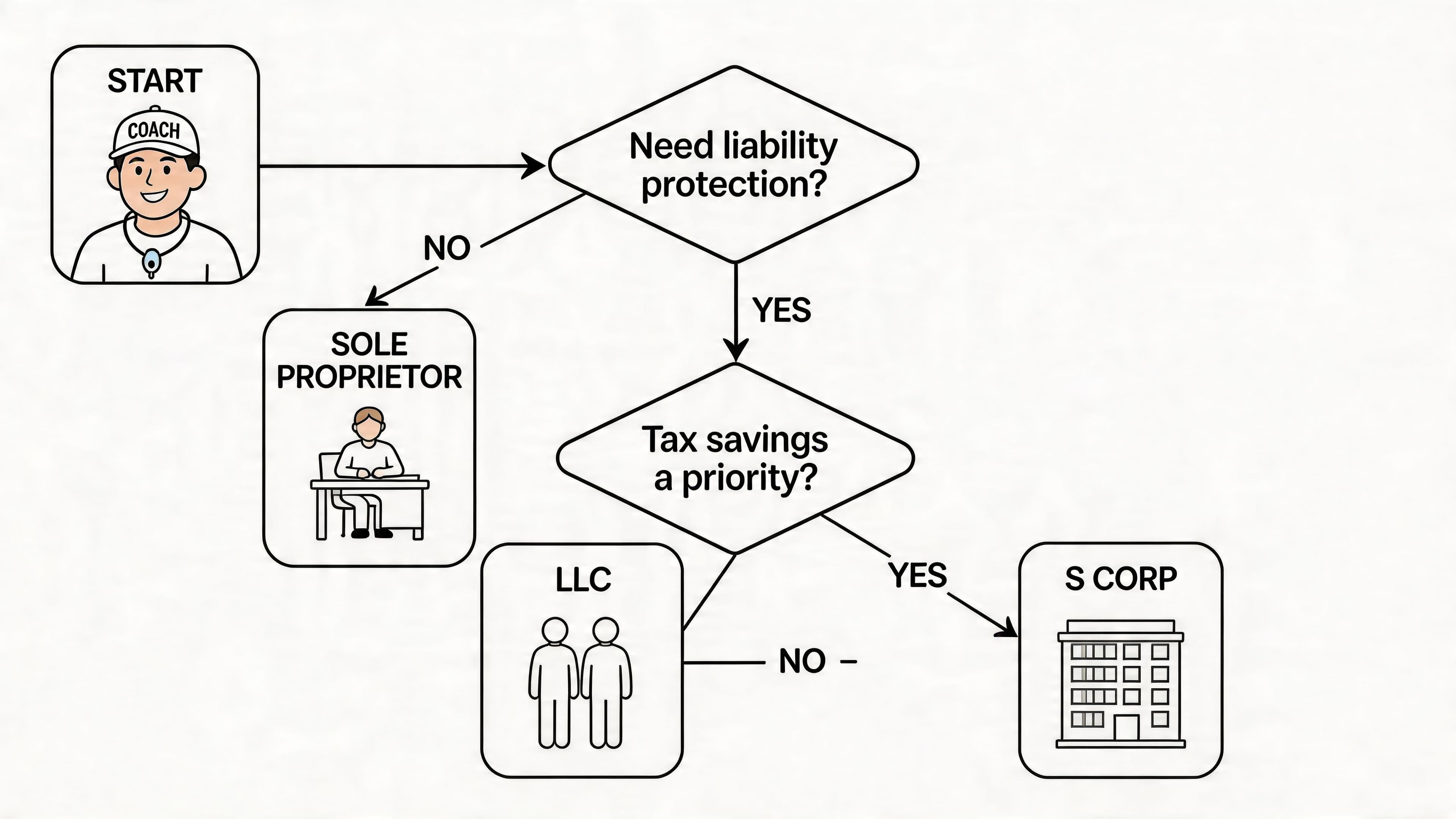
Path one for the coach who's just getting traction
You're signing clients, but the business still feels early. Revenue is coming in, yet your main focus is validating the offer, tightening your niche, and getting consistent.
Ask yourself:
- Do I need maximum simplicity right now?
- Am I still proving this business model works?
- Is my main problem sales consistency, not tax efficiency?
If that's you, a sole proprietorship can work for a short season.
I said short.
This is the "don't overbuild too early" path, not the "stay informal forever" path. Once real client work, contracts, and meaningful revenue are involved, I want you moving toward an LLC.
Path two for the coach who's booked and wants protection
This coach has moved beyond dabbling. The business is stable. Clients are paying. Referrals are happening. You may be running private coaching, intensives, or small group programs.
The core question is no longer "Can I make money?" It's "Why am I still personally exposed?"
That answer points to LLC.
Choose the LLC path when:
- You want a liability barrier between business and personal life
- You want a cleaner professional setup
- You want flexibility to elect S Corp taxation later
- You don't want full corporate formalities yet
This is my favorite middle stage for coaches because it matches reality. You're serious, but you don't need to overcomplicate the business just to feel advanced.
Most successful solo coaches should not jump from casual sole proprietor straight into complexity without first getting the basic legal separation right.
Path three for the coach making strong profit
This is the coach who feels taxes every quarter.
Not theoretically. Financially.
You might be fully booked. You might have raised prices. You might have recurring packages, corporate retainers, or a strong referral engine. The business is generating enough profit that tax efficiency matters in a material way.
That is when the S Corp election deserves serious attention.
Your questions now are different:
- Am I paying self-employment tax on more profit than I need to?
- Would payroll and compliance be worth the savings?
- Am I ready to operate with tighter financial discipline?
If yes, talk to a CPA about S Corp treatment.
The decision logic in one table
| What describes you best | Likely best fit |
|---|---|
| Testing an offer, early revenue, want zero friction | Sole proprietorship, temporarily |
| Stable client work, want protection, want a clean foundation | LLC |
| Strong profit, tax bill hurts, willing to run payroll and maintain compliance | LLC taxed as an S Corp or S Corp setup, depending on professional advice |
A few edge-case realities
Some coaches think the answer is C Corp because it sounds more advanced. For most owner-operated coaching businesses, I don't like that move. The tax treatment often doesn't fit how a solo or small coaching business distributes profit.
Some coaches also cling to sole proprietorship because it feels personal and flexible. That's usually just another way of saying they haven't updated the business to match its success.
And some coaches form an LLC, then stop there even after profit climbs enough to justify a tax election review. That's a common half-step. Better than staying exposed. Still incomplete.
My direct recommendation by stage
If you want the short version, here it is:
- Starting out: sole prop is acceptable, but only as a temporary launch vehicle
- Real clients and real exposure: LLC
- Real profit and real tax pain: S Corp conversation now
That sequence works because it follows the emotional journey of coaching growth. First you need ease. Then you need protection. Then you need efficiency.
When to Call in the Pros A CPA and Attorney
DIY research is fine until the stakes rise.
There comes a point where trying to save money by figuring everything out yourself becomes the expensive move. This is especially true once your coaching business starts producing meaningful profit or handling more complex contracts.
Call a CPA when tax structure becomes consequential
You should bring in a CPA when any of this starts happening:
- Profit is climbing and you're wondering if S Corp status makes sense
- You need help determining a reasonable salary
- You want payroll handled correctly
- Your quarterly tax payments feel inconsistent or painful
- You're making enough that a bad tax setup will cost real money
A good CPA doesn't just file forms. They help you decide whether the added structure is worth it. If you need a starting point for finding one, Hire CPAs is a practical directory.
Call an attorney when legal exposure changes
Bring in an attorney when:
- You're signing larger corporate coaching agreements
- You're bringing on a partner
- You're changing ownership
- You're creating more customized legal terms
- A client dispute starts sounding serious
This is not about paranoia. It's about timing. Lawyers are much cheaper before a problem than during one.
Pay professionals when the cost of being wrong exceeds the cost of getting help.
My threshold
If your business still feels tiny and experimental, you can handle more of the basics yourself.
If it feels like an actual company, stop trying to white-knuckle every legal and tax decision from random internet content. One clean consultation can save you from a year of avoidable mistakes.
Your Lingering Questions Answered
I'm already a sole proprietor. How do I switch to an LLC
You form the LLC with your state, update your business banking, move contracts and invoicing under the company name, and start operating through the entity consistently. The hard part isn't usually the filing. It's cleaning up the loose ends so the business functions as a separate business.
If you're profitable, many coaches form the LLC first and then ask their CPA whether an S Corp election should follow.
Can my LLC or S Corp pay my spouse or children
Potentially, yes, but casual internet advice quickly becomes dangerous. If you're paying family members, the pay needs to reflect real work and clean documentation. Don't use family payroll as a creative shortcut without professional guidance. That's exactly the kind of move that deserves a CPA's review.
What happens if my business has a loss for the year
The answer depends on your setup and tax situation, but the big-picture point is simple. A loss year changes the emotional temperature of the decision. If profitability is weak or inconsistent, tax optimization becomes less urgent and simplicity matters more. In that case, the liability conversation may still justify an LLC even when the tax conversation doesn't yet justify S Corp status.
Do I need a different structure if I coach clients internationally
Not automatically.
The structure question and the client-location question aren't the same issue. You may still use an LLC or S Corp while serving international clients, but cross-border taxes, payments, contracts, and compliance can add complexity. That's one of the moments when generic advice stops being enough.
Is an LLC better than a sole proprietorship for taxes
Not by default. For many solo owners, an LLC's main value is legal separation and flexibility, not automatic tax savings. Coaches often assume "LLC" means lower taxes. It doesn't unless you choose a different tax treatment and the business profit supports that move.
Should I stay a sole proprietor because it's easier
Only if easy is still the thing you need most.
If you're early, maybe. If you're established, no. At some point, staying easy starts making your business fragile. That isn't simplicity. That's neglect dressed up as convenience.
What's the smartest path for most coaches
For most serious solo coaches, the path is simple:
- start lean if you must
- form an LLC once the business is real
- review S Corp taxation when profit gets strong enough to justify payroll and compliance
That's the practical answer. Not sexy. Not complicated. Just effective.
If you're building a coaching business that needs to look and run like a real company, Coachful gives you one place to manage client onboarding, scheduling, payments, notes, progress tracking, and program delivery without duct-taping a dozen tools together. It's a cleaner operational foundation for coaches who are done winging it.