How to Collect Phone Numbers Ethically & Effectively

Coachful

You send a thoughtful check-in email on Monday. By Thursday, your client says, “Sorry, I just saw this.”
That moment costs more than a missed message. It breaks momentum. The habit you were trying to reinforce fades. The pre-session reflection never happens. The reminder about the action step disappears into promotions, newsletters, and internal company traffic.
Many coaches think about collecting phone numbers as a marketing tactic. That framing is too small. In practice, a phone number is often the shortest path to better attendance, cleaner logistics, faster support, and stronger accountability. Used well, it doesn't make your coaching feel more commercial. It makes it feel more present.
Clients don't need more noise. They need the right message at the right moment, delivered in a channel they notice. That is where SMS earns its place.
Beyond the Inbox Why Your Coaching Practice Needs SMS
A client leaves a session clear on what to do next. You send the recap by email. By the time they read it, the week has filled up, the hard conversation didn't happen, and the commitment you worked for has already lost force.
That gap matters in coaching.
Email is useful for longer notes, worksheets, and documentation. SMS serves a different job. It helps the client see the message while the work still feels current, whether that message is a reminder, a short check-in, or a prompt tied to one specific action. For coaching practices, collecting phone numbers is less about promotion and more about continuity.
The value is practical. A text can reduce missed sessions, shorten scheduling back-and-forth, and make accountability easier to maintain between calls. It also changes the tone of support. A well-timed message feels like presence, not pressure, because it meets the client in a channel they are already watching throughout the day.
What changes when you have the right channel
Once a client chooses to receive texts, communication gets simpler in ways that directly support results:
- Before a session: reminders cut down on no-shows, lateness, and forgotten prep
- Right after a session: a brief recap keeps the next action visible
- Between sessions: one focused check-in helps the client follow through without needing a full email thread
- During an ongoing program: changes to timing, links, or logistics reach people quickly
A good coaching text is short and concrete: “We meet at 3 PM tomorrow. Bring one example of where you avoided giving direct feedback this week.”
That kind of message does more than confirm attendance. It helps the client arrive prepared.
A phone number is not just contact information. In coaching, it is a permission-based channel that protects momentum.
I see coaches hesitate here for understandable reasons. They do not want to sound intrusive, and they do not want their practice to feel like a marketing machine. That concern is healthy. The answer is not to avoid SMS. The answer is to use it with restraint, clarity, and consent. Call Loop's TCPA compliance guide explains why written permission matters before you start texting clients.
Where SMS earns its place
SMS works best when the message is time-sensitive, specific, and tied to coaching that is already in progress.
Use it for reminders, confirmations, one-question check-ins, and brief accountability prompts. Use email for longer reflection, nuanced feedback, agreements, and anything a client may need to revisit in detail later. Practices run better when each channel has a clear role.
Problems start when coaches treat text like a second newsletter. Long paragraphs, repeated motivational messages, and frequent offers wear people out fast. Clients usually welcome helpful contact. They pull back from clutter.
Collect phone numbers with that distinction in mind, and SMS becomes a service tool. It helps clients follow through, helps coaches reduce administrative friction, and helps the relationship stay active between sessions.
The Foundation of Trust Getting Consent and Compliance Right
A client fills out your intake form at 9:30 p.m. after finally deciding to commit to coaching. They are hopeful, a little exposed, and trying to judge whether your practice feels safe. The phone number field carries more weight than it looks like. If the request feels vague or opportunistic, trust drops before the first session even happens.
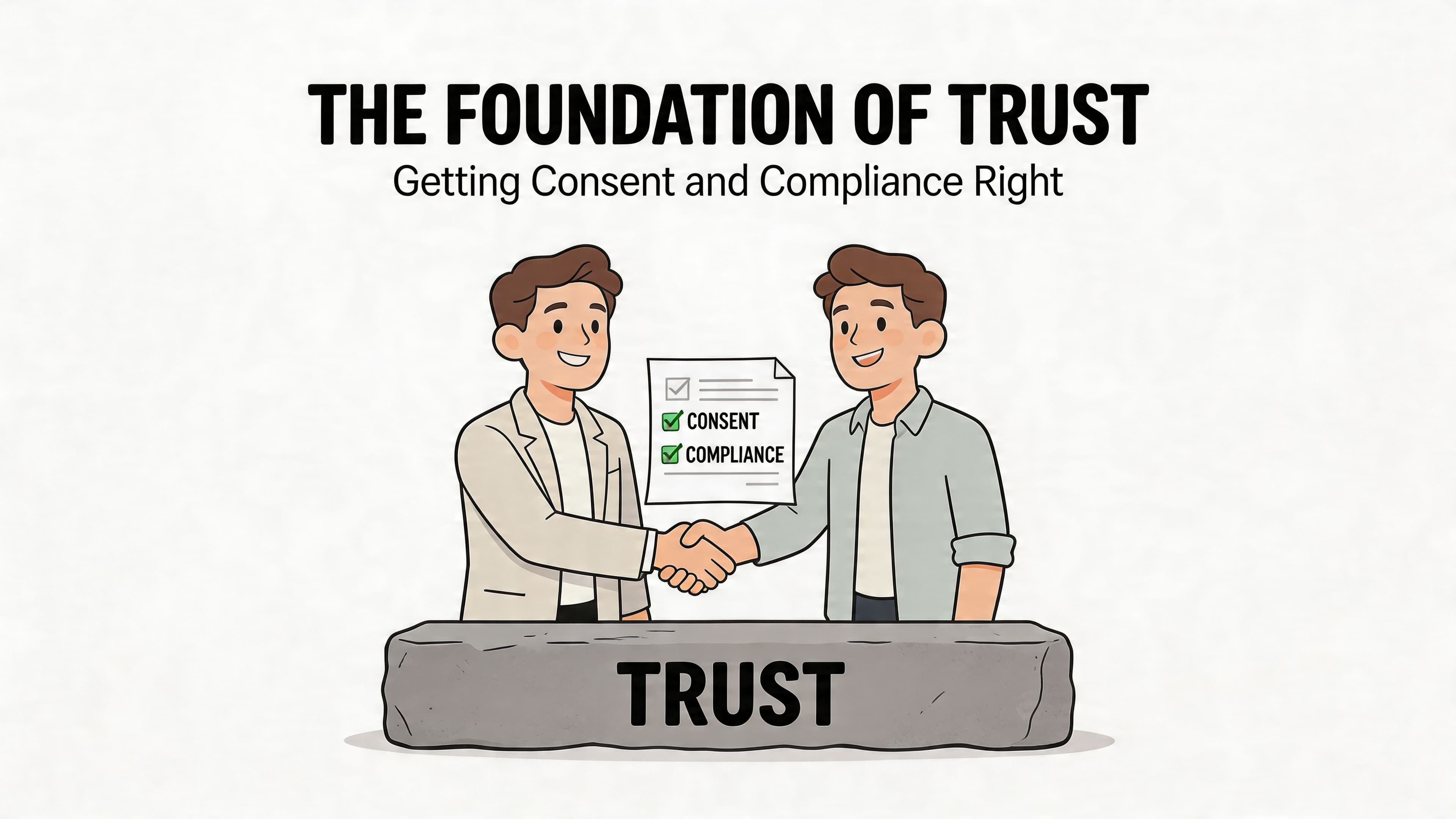
In coaching, consent is not a legal box to tick after the core work is done. It is part of the coaching relationship itself. Clients share a number because they believe it will help them stay organized, stay accountable, and get support at the right moment. That trust is easy to damage and hard to rebuild.
Weak consent usually sounds polite but unclear. “Enter your phone if you'd like.” Then the coach uses that number for reminders, promotional offers, and follow-ups the client did not expect. The problem is not just compliance. It is mismatch. The client agreed to one kind of access and received another.
Clear consent does three jobs at once. It protects your practice, lowers client hesitation, and sets the tone for respectful communication.
What good consent looks like
Good consent is:
- Separate: not buried inside terms and conditions
- Specific: it explains what kinds of texts you send
- Active: the client takes a clear action to agree
- Easy to reverse: opting out is simple and honored promptly
That last point matters more than many coaches realize. People share sensitive information more readily when control stays in their hands.
Practical rule: If a client would be surprised to receive your text, your consent process was not clear enough.
I also recommend keeping consent tied to delivery, not marketing. In a coaching practice, that usually means session reminders, schedule changes, brief accountability prompts, and agreed resource links. If you also send promotions, ask for that separately. Blending service texts with sales messages creates confusion fast.
For a simple resource on the legal side, Call Loop's TCPA compliance guide explains express written consent in plain language.
Copy you can actually use
Good consent copy sounds like a professional setting expectations, not a lawyer hiding risk.
For an intake form
“I agree to receive text messages related to my coaching services, including session reminders, scheduling updates, and accountability check-ins. Message frequency varies. I can opt out at any time.”
For a booking page
“Yes, send me text reminders and booking updates for my appointments.”
For a program enrollment page
“I agree to receive SMS messages related to this coaching program, including reminders, resource links, and support prompts. I understand I can opt out at any time.”
These examples work because they answer the client's real questions. Why do you need my number? What will you send? Can I stop later?
The trust mistakes coaches make
I see four mistakes often:
- Bundling consent: one checkbox covers reminders, marketing, and follow-up
- Using soft language: “we may contact you from time to time”
- Leaving the scope fuzzy: no distinction between service texts and offers
- Making opt-out awkward: clients have to email, call, or ask manually
Each one adds friction. Each one also makes the number feel less like a support tool and more like an open door into the client's private space.
This is also where your systems matter. If you collect numbers from multiple places, your wording and consent settings need to match across all of them. A link in bio page that routes people to your booking page, application form, or program enrollment can help keep that experience consistent, but only if every path uses the same clear permission language.
Clear consent usually improves response
Coaches sometimes worry that more explicit wording will reduce opt-ins. In practice, clear boundaries often increase the quality of the yes.
People hesitate when they sense hidden costs. They relax when the use case is narrow and useful. “We use text for reminders and agreed check-ins” is easier to trust than “add your phone for updates.”
That is the standard worth holding. Ask clearly. State the purpose. Keep the scope tight. Then use the number in ways that help the client follow through, not in ways that make them regret sharing it.
Where and How to Ask The Three Best Moments to Collect Numbers
If you ask for a phone number at the wrong moment, it feels intrusive. If you ask at the right moment, it feels useful.
That difference has less to do with form design than with client psychology. People share contact details when the purpose is obvious. They hesitate when the request feels premature, vague, or disconnected from immediate value.
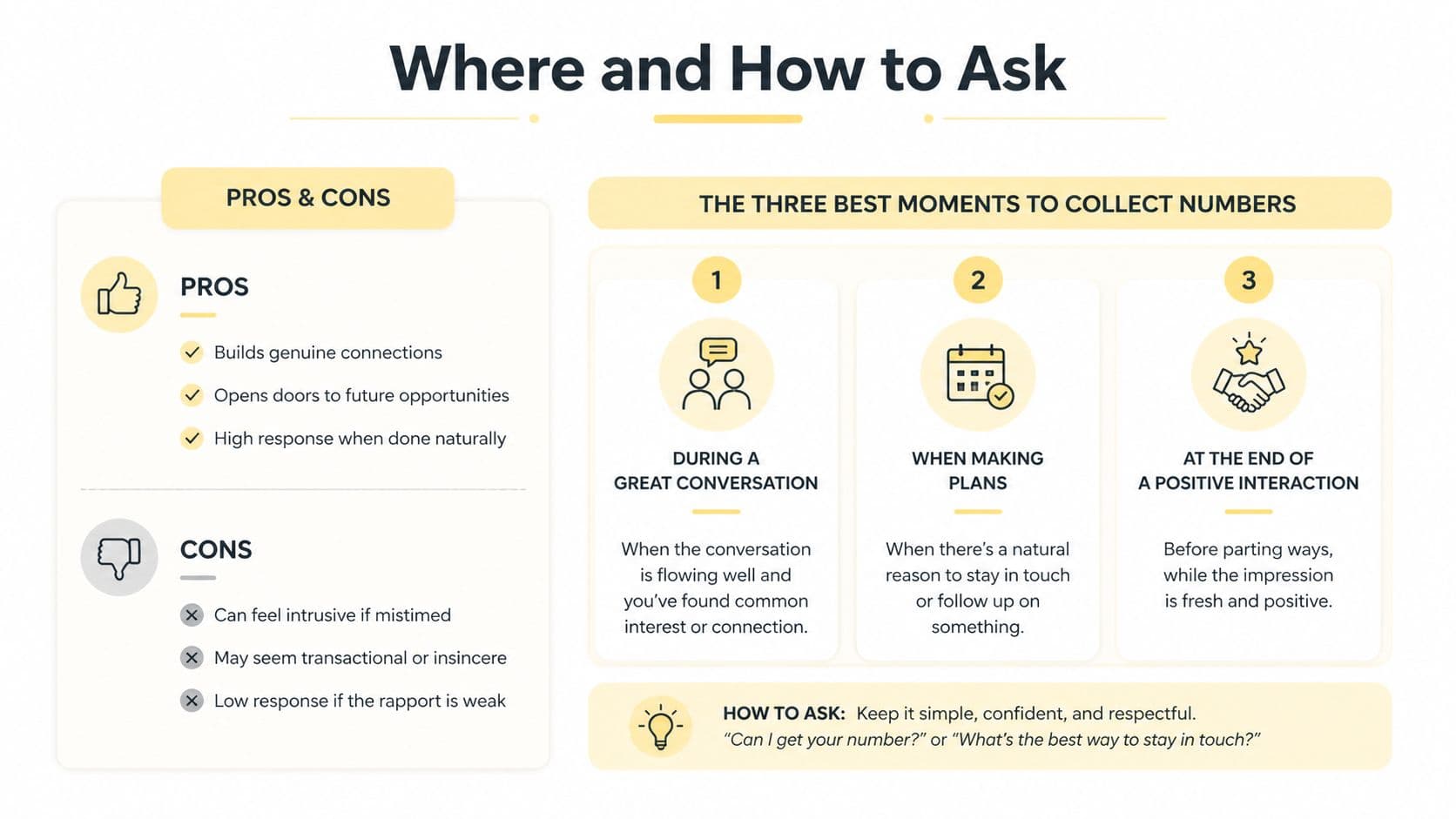
Three moments work especially well in coaching practices. Each serves a different function, and each needs different wording.
The intake form
This is the best place to collect phone numbers when your work involves ongoing communication. The client is already entering personal details, answering reflective questions, and preparing for a real engagement. The request doesn't feel random.
Use language tied to care and coordination, not promotion.
Example:
“Phone number
Used for session reminders, scheduling changes, and agreed coaching check-ins.”
This works because it anchors the request to service delivery. It tells the client why the field exists.
Good fit for:
- One-to-one coaching packages
- Executive coaching engagements
- Ongoing retainer relationships
- Programs with assignments between sessions
Watch out for one mistake. Don't make the field feel mandatory unless it is operationally necessary. If it is optional, say so. If it is required for reminder delivery, explain that directly.
The booking page
The booking page is where convenience becomes the strongest frame. The client is actively trying to secure a time. They're thinking about calendars, reminders, and avoiding mix-ups.
A simple line can carry a lot here:
“Add your mobile number to receive appointment reminders and booking updates by text.”
This moment works because the value is immediate. The client doesn't have to imagine a future benefit. They can see the practical use now.
A coach who runs discovery calls, consultations, or short-format sessions can often start here. It creates a low-friction first opt-in tied to logistics rather than broad messaging.
Clients rarely object to sharing a number when the benefit is obvious and the scope is narrow.
The value exchange
This one is different. Here, you're not asking in the middle of logistics. You're offering something the client wants now.
Examples include:
- A reflection prompt series by text
- A session prep checklist
- A short accountability challenge
- A resource drop tied to a workshop or webinar
The key is relevance. “Get occasional texts” is weak. “Get the 5-day confidence reset by text” is concrete.
If you use a public profile or content hub, a link in bio page can help route prospects to a focused opt-in page where the benefit is clear and the ask feels intentional.
Phone Number Collection Points Comparison
| Collection Point | Primary Goal | Client Mindset | Best For |
|---|---|---|---|
| Intake form | Establish communication preferences early | “I'm starting a real coaching relationship” | Ongoing coaching clients |
| Booking page | Reduce scheduling friction | “I don't want to miss this appointment” | Discovery calls and appointments |
| Value exchange | Earn permission through relevance | “I want this resource or prompt” | Audience building and light-touch nurturing |
What to say at each point
Different moments need different levels of commitment.
- On intake forms: “Share the best number for reminders and agreed coaching check-ins.”
- On booking pages: “Enter your mobile number for appointment reminders and booking updates.”
- On resource opt-ins: “Get this coaching resource by text, plus related support messages if you choose to continue.”
The phrase “if you choose to continue” matters. It signals that consent isn't a trap.
What works better than asking everywhere
Many coaches make the form longer, add more fields, and assume more exposure means more data. Usually it just creates more friction.
A better approach is to place the ask where it matches intent.
If you're refining forms and want ideas for cleaner conversion paths, Orbit AI has a useful guide for qualified lead generation that applies well to coaching forms too. The big takeaway is simple. Fields perform better when each one has an obvious job.
A practical setup for most coaches
If you're unsure where to start, use this sequence:
- Collect on the booking page for reminders and scheduling.
- Confirm preferences on intake once the relationship begins.
- Offer one optional SMS resource for clients who want more between-session support.
That sequence feels natural. It doesn't rush intimacy. It earns it.
Crafting the Perfect Message SMS Best Practices for Coaches
Sending texts that feel supportive, not invasive, is the skill that determines whether a phone number becomes useful or starts to feel like a boundary problem.
A client finishes a session with clear momentum. Then your follow-up text arrives. If it points them back to the commitment they made, it strengthens accountability and keeps the coaching relationship active between calls. If it feels generic, promotional, or oddly timed, it creates friction you now have to repair.
That distinction matters because SMS works best as relationship infrastructure, not as a mini marketing channel. The BLS discussion of unanswered phone outreach reinforces the broader point that interruption-based phone outreach is harder to sustain. Coaches do better with expected, consent-based messages tied to real moments in the client journey.
Tie every text to a coaching job
The best coaching texts do one clear job.
They remind. They confirm. They prompt follow-through. They deliver something the client asked for. They reduce the chance that a good session gets lost in a busy week.
Useful examples:
- a reminder before a session with one preparation prompt
- a short accountability check tied to a stated goal
- a worksheet or reflection prompt promised during the last call
- a behavior-change prompt during a focused sprint
Weak examples:
- broad motivational quotes with no client context
- recurring promotions mixed into service messages
- long explanations better suited to email or a portal
- pressure-heavy texts that ask for compliance without offering support
Four rules that keep SMS effective
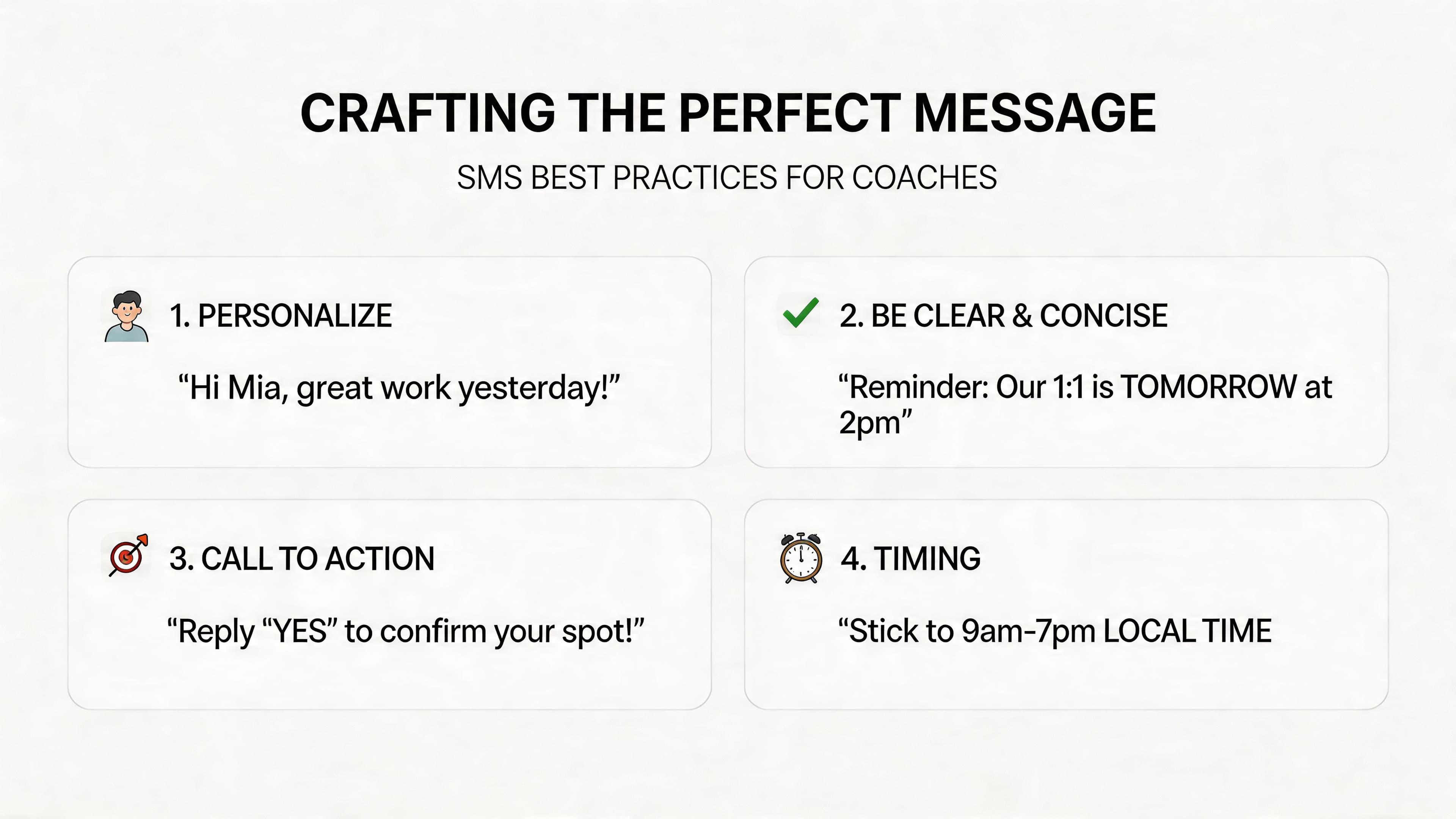
- Use the client's real context: Reference the habit, conversation, or obstacle they named. “Did you try the pause before responding in that team meeting?” gets better replies than “Checking in.”
- Ask for one small action: One reply, one reflection, or one click is usually enough.
- Respect timing: Default to business hours unless the client has asked for a different rhythm.
- Write like a professional human: Short, clear, and specific beats polished campaign copy every time.
For a broader framework, these effective coach client communication strategies apply the same principles across email, calls, and client touchpoints.
Short texts reduce friction. Specific texts improve response quality.
Templates you can adapt
Session reminder
“Hi Maya, we meet tomorrow at 2 PM. Bring one example of where the old pattern showed up this week.”
Post-session follow-up
“Strong work today. Your focus this week is one boundary-setting conversation by Friday. Reply DONE when it's complete.”
Accountability check-in
“You said consistency matters more than intensity this week. Did you do the morning reset today?”
Resource delivery
“Here’s the worksheet we discussed. Review it before Thursday and mark the prompt that felt most uncomfortable.”
Gentle re-engagement
“Haven’t heard from you since our last session. No pressure. Do you want a quick reset plan for this week?”
Each one has a defined purpose. That is why they work.
What usually goes wrong
Coaches rarely damage trust with one terrible text. It usually happens through drift. Messages get longer. Boundaries get blurrier. Administrative updates start sharing space with offers. A useful channel turns noisy.
Watch for these patterns:
- texting so often that support starts to feel like monitoring
- writing multi-topic messages that require too much mental effort
- using guilt to trigger a reply
- slipping an upsell into a reminder or check-in
- leaving basic data quality problems unresolved instead of validating phone numbers effectively before messages go out
The trade-off is simple. More messages can create more touchpoints, but fewer, better messages usually create more trust.
The tone clients respond to
Warm. Direct. Bounded.
That means no hype, no fake urgency, and no casual intimacy you have not earned. It also means avoiding vague “just checking in” texts. Those often put the burden on the client to figure out what you want.
A strong coaching text helps the client do one of three things. Prepare for something. Remember something. Follow through on something. If a message does not clearly serve one of those jobs, it probably should not be a text.
Automate and Secure Your Communication Workflow
The moment many coaches hesitate is practical. “This sounds good, but I don't want another manual task.”
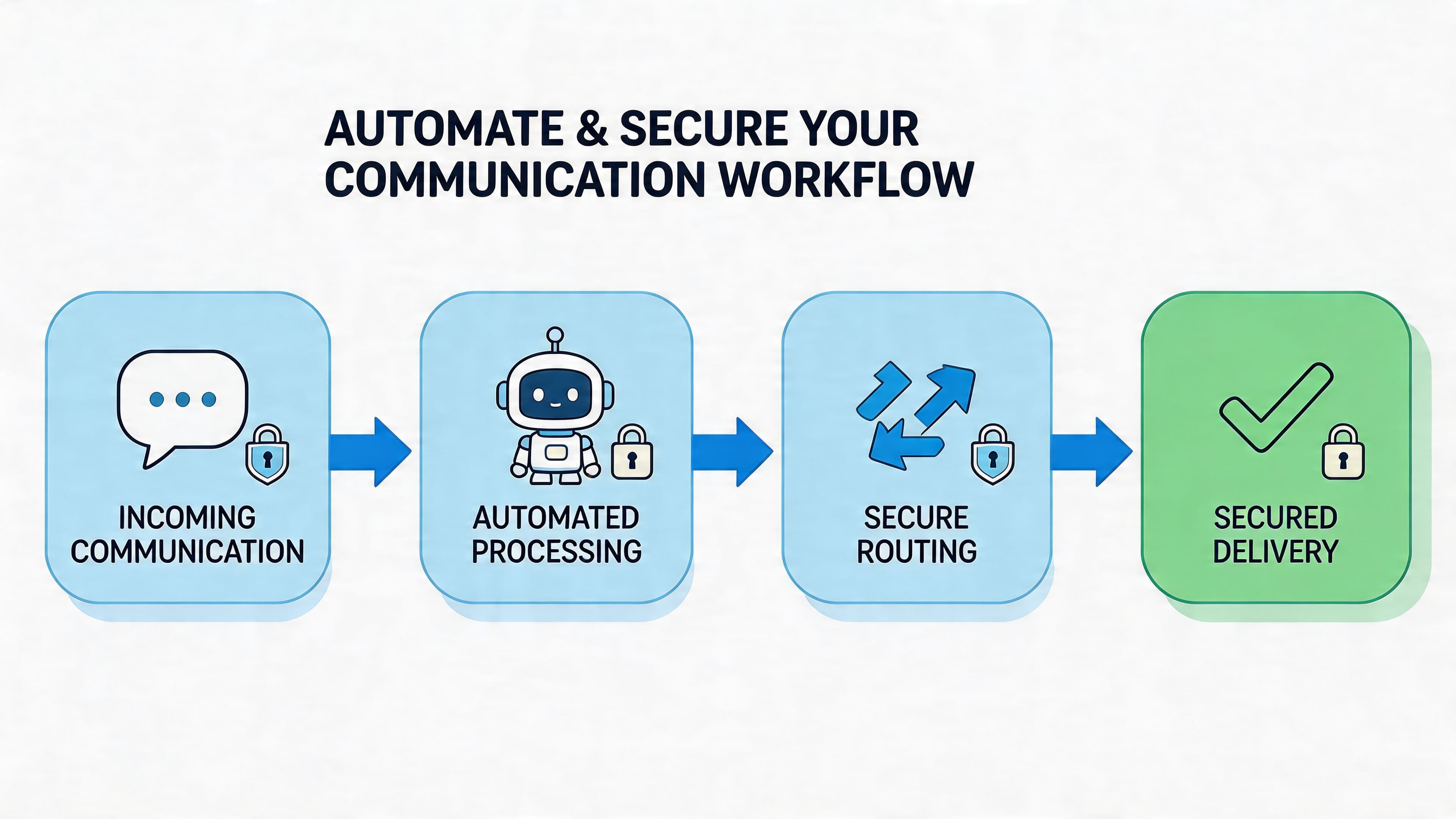
That's the right concern. If SMS depends on memory, you'll either underuse it or overcomplicate it. The answer isn't sending more messages yourself. The answer is building a workflow where the predictable messages happen automatically, and the personal messages happen intentionally.
What to automate and what to keep human
Automate the messages that are operational and repeatable:
- Appointment reminders: before sessions
- Scheduling changes: confirmations, reschedules, cancellations
- Post-session logistics: links, forms, worksheets
- Program prompts: recurring reminders tied to a curriculum
Keep these human:
- emotionally sensitive follow-ups
- nuanced accountability messages
- difficult conversations
- personalized encouragement after a setback
That split protects both efficiency and trust. Clients appreciate consistency, but they can feel when a message should have come from you personally.
Build from one client journey, not ten disconnected tools
A common mistake is storing numbers in one form tool, notes in a document, appointments in a calendar, and consent screenshots somewhere else. It works for a while. Then a client opts out, changes numbers, or asks what they signed up for, and you have to reconstruct the history manually.
A cleaner workflow ties together:
- collection
- consent record
- scheduling
- messaging
- client history
That doesn't just save admin time. It reduces avoidable mistakes.
If you're redesigning onboarding systems, this article on how to transform your coaching practice through automation is a practical companion to the workflow side of this decision.
Secure communication is not separate from efficient communication. In coaching, the safest system is often the one with the fewest handoffs.
Validate before you rely on the data
Phone data gets messy fast. Numbers are mistyped, copied in inconsistent formats, or entered with missing digits. Before you automate reminders, make sure your system checks for basic validity.
For a technical primer on formatting logic, DialNexa has a helpful piece on validating phone numbers effectively. Even if you never touch regex yourself, it helps to understand why validation matters before messages start failing unnoticed.
At a minimum, your setup should do three things:
- capture numbers consistently
- keep consent attached to the record
- let you update or suppress messaging preferences quickly
Why spreadsheets become risky
Many solo coaches start with a spreadsheet because it's easy. The problem isn't just clutter. It's exposure.
Spreadsheets get duplicated. Tabs get shared. Old exports sit in inboxes. Notes apps don't show who changed what or when. That matters when you're handling personal contact information and communication preferences.
A secure system should make it easy to:
- restrict access
- centralize records
- preserve preference history
- avoid loose copies of client data
The less scattered your client communication data is, the easier it is to protect both privacy and continuity of care.
Troubleshooting Common Questions and Concerns
Even when your process is ethical and clear, a few objections come up repeatedly. Most of them aren't really about the phone number. They're about trust, control, and relevance.
What if clients don't want to share their number
Don't push harder. Clarify the benefit and leave the choice with them.
Try this:
“No problem at all. I use text mainly for reminders and brief check-ins because it's easier for some clients than email. If you'd rather keep everything in email, that's completely fine.”
That response does two things well. It explains the purpose, and it removes pressure. People are more likely to opt in when they don't feel cornered.
What if someone opts out
Treat opt-outs as normal preference management, not rejection.
A simple response works:
- Acknowledge the request: “Got it.”
- Confirm the change: “I'll keep communication to email from here.”
- Move on professionally: no persuasion, no guilt, no “are you sure?”
Graceful exits preserve trust. They also signal that your original consent process was genuine.
My opt-in rate is low. What should I change
Usually the problem isn't that clients hate SMS. It's that the request is unclear.
Check these areas:
- Your wording: Does it explain what texts they'll receive?
- Your timing: Are you asking too early, before value is established?
- Your framing: Are you making it about your convenience instead of theirs?
- Your form design: Is the checkbox buried or confusing?
- Your follow-through: Have you trained clients to expect useful messages, or random ones?
If your current copy says “Enter your phone for updates,” rewrite it. “Get session reminders and agreed coaching check-ins by text” is much easier to trust.
What if I'm worried about sounding intrusive
This is usually a message design problem, not a channel problem.
A good coaching text is:
- expected
- relevant
- brief
- easy to ignore without penalty
An intrusive one arrives out of nowhere, asks for too much, or feels like surveillance. If you're unsure, read the message from the client's side. Does it help them do the work, or does it mainly help you feel in control?
That question keeps your communication honest.
Conclusion Your Next Step to a More Connected Practice
When coaches collect phone numbers well, they're not building a list. They're building a cleaner relationship system.
The difference matters. A number collected through clear consent and used with restraint can reduce missed sessions, support follow-through, and make your practice feel more responsive. A number collected vaguely and used carelessly does the opposite.
The pattern that works is simple. Ask at the right moment. Explain the benefit plainly. Keep consent explicit. Send messages that are timely, relevant, and short. Automate the predictable parts. Protect the data like it matters, because it does.
Don't try to overhaul everything this week.
Pick one step. Add a phone-number field to your booking page with clear consent language. Or update your intake form so clients can choose reminders by text. Or write one SMS template for post-session accountability and use it consistently.
Small operational changes create noticeable relational gains. Your clients feel that. So do you.
If you want a simpler way to put this into practice, Coachful brings onboarding, scheduling, messaging, reminders, notes, and client management into one secure coaching workspace, so you can support clients consistently without stitching together a dozen separate tools.