How to Get Involved in My Community and Make a Real Impact

Coachful
Finding your place in the community isn't about adding another chore to your list. It’s about discovering that sweet spot where your personal passions, unique skills, and the needs of your neighborhood all intersect. You might be thinking, "Another thing to do? Where would I even start?" The whole process can start with a little self-reflection, then branch out into exploring what's happening locally, and finally, take root with small, manageable actions that actually fit into your life.
Why Community Involvement Matters More Than You Think
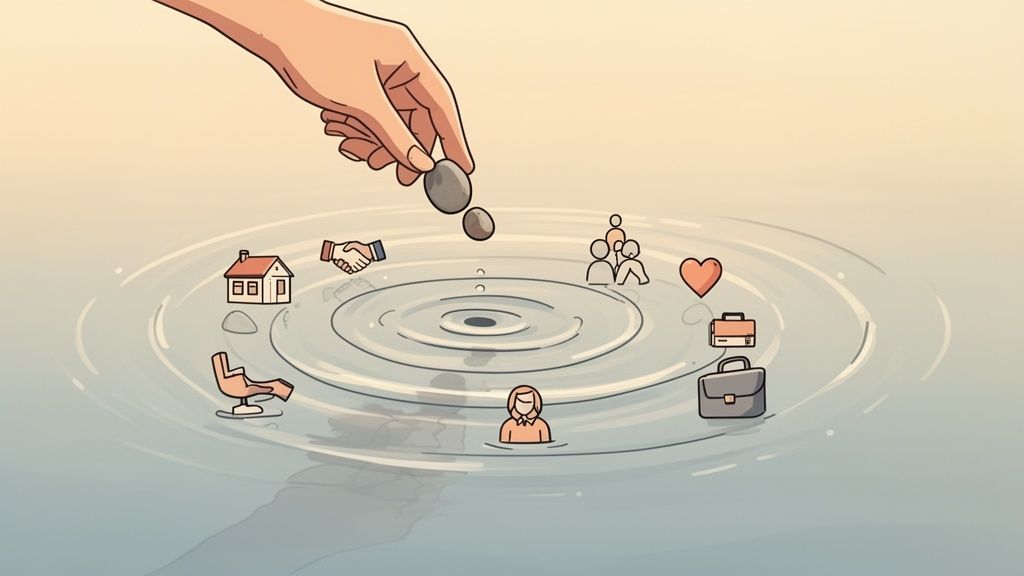
You feel that nudge to get more involved, but then the doubts start to creep in. “I’m just too busy.” “How can one person even make a difference?” Or the big one for a coach: “I don’t know anyone here. I build communities for a living, but I don't feel connected to my own neighborhood. Where would I even start?” Trust me, these are completely normal thoughts, especially for busy professionals and coaches who are already juggling a million things.
Let's flip the script on how we think about community involvement. Instead of viewing it as another obligation, think of it as a smart investment in your own happiness, well-being, and even your coaching practice. The returns go way beyond just a warm, fuzzy feeling.
Beyond the Feel-Good Factor
When you start participating in what's going on around you, you're doing more than just helping build a park or support a local program. You're building a genuine connection to the place you call home. That deep sense of belonging is a powerful antidote to the feeling of isolation so many of us experience these days.
It’s no surprise that studies consistently show people with strong social ties report being happier and more satisfied with their lives. Getting involved in your community is one of the most direct ways to build those very connections, turning strangers on your street into familiar faces and maybe even future friends or clients.
For many, community becomes a real source of strength and mutual support. It's about sharing experiences and perspectives—the good, the bad, and the messy. This shared journey builds a support system you can actually lean on when you need it. Think of it as the ultimate mastermind group, but for your life, not just your business.
The Ripple Effect of Your Contribution
It's so easy to fall into the trap of thinking your contribution is just a drop in the ocean. As a coach, you know small shifts lead to big results for your clients. The same applies here. Small, consistent actions have a way of creating significant ripples.
- Building a Powerful Local Network: Showing up to local events or joining a committee puts you in the same room with other motivated, like-minded people. I’ve seen these connections blossom into incredible friendships, unexpected business referrals, and doors opening to new professional opportunities. For a coach, this is ground-zero for authentic, warm networking.
- Boosting Personal Well-being: The act of giving back is directly linked to reduced stress and a greater sense of purpose. It naturally shifts your focus outward, which can give you a much-needed, healthy perspective on your own daily challenges. It's the same advice you might give a client feeling stuck.
- Developing New Skills: Volunteering can be a fantastic, low-risk way to flex muscles you don't use in your day job. For example, a business coach might join a non-profit board and gain hands-on experience in governance, a skill that adds incredible value to their C-suite clients.
By getting involved, you shift from being a passive resident to an active stakeholder. You're no longer just living in a town; you're helping to shape its future. That sense of agency is incredibly empowering.
Mapping Your Skills to Community Needs
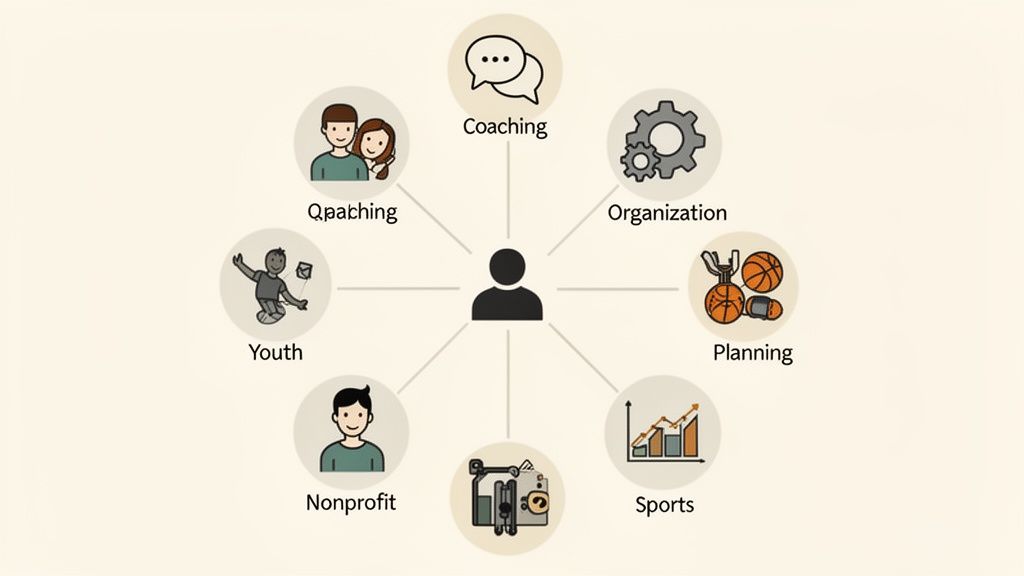
So you want to get more involved, but you’re stuck on one big question: “What can I actually do?” It's a surprisingly common roadblock. The desire is there, but without a clear path, it’s easy to feel paralyzed by all the options and end up doing nothing at all. As a coach, you're probably thinking, "My skills are in strategy and mindset. How does that help a soup kitchen?"
The secret isn’t just finding any role; it's about finding the right one. A role where your contribution feels genuinely impactful and, just as importantly, fulfilling for you.
This whole process begins with a bit of honest self-reflection. Before you start looking at what your community needs, take a moment to look inward. What are you already good at? What activities make you feel energized? The answers to those questions hold the key to finding a way to get involved that you'll stick with for the long haul.
Connect Your Talents to Local Needs
Every single one of us has a set of skills—honed through our careers or hobbies—that local organizations desperately need. The real trick is learning to see how your everyday abilities can solve real-world problems for them. You're a coach who's a master at strategic planning, holding people accountable, and facilitating tough conversations. These aren't just bullet points on your LinkedIn; they are superpowers for a non-profit.
Think of it like this: I once saw a local youth soccer league struggling with chaotic sign-ups and messy communication. A parent who happened to be a project manager stepped in and streamlined their entire process in a weekend. It was a perfect match of their professional talent to a community problem. For a coach, this could look like facilitating the annual planning meeting for that same league's board.
To help you find your own perfect match, let's turn this into a practical exercise. I want you to take a few minutes and jot down your thoughts in a few key areas.
- Your Professional Skills: List concrete skills from your job. As a coach, think facilitation, strategic planning, active listening, goal setting, accountability frameworks, public speaking, or content creation.
- Your Personal Passions: What do you love doing in your free time? This could be anything—gardening, hiking, mentoring kids, playing music, planning events.
- Your Available Time: Now, be brutally honest with yourself. Is it two hours a week? One Saturday a month? Knowing your true capacity from the start is the best way to avoid burnout and keep your promises.
With these lists in hand, you can start looking for the overlap. For instance, if you're a coach who thrives on helping people map out their futures, you could run a goal-setting workshop for a local nonprofit. If you're wondering how to put something like that together, you can find excellent guidance on how to write an effective curriculum to get started.
It's often easier to see these connections when we look at how our day-job skills translate directly into community roles. The table below can help you brainstorm some possibilities.
Matching Your Professional Skills to Community Roles
This table is designed to help you identify how your professional skills translate into impactful community roles.
| Your Professional Skill | Potential Community Role | Example Action |
|---|---|---|
| Project Management | Event Coordinator | Plan and execute a fundraising gala for a local charity. |
| Marketing/Social Media | Communications Volunteer | Manage the social media for an animal shelter to boost adoptions. |
| Graphic Design | Creative Volunteer | Design professional flyers for a neighborhood block party. |
| Accounting/Finance | Treasurer | Oversee the budget for a school’s parent-teacher association. |
| IT/Tech Support | Tech Advisor | Help a senior center set up and troubleshoot their new computers. |
Seeing your skills in a new light can be a game-changer. A coach isn't just a coach; they're a potential board facilitator, a strategic planner for a local cause, or a mentor for emerging leaders.
Real-World Examples in Action
Let’s look at a few more concrete examples of how this plays out for someone with your talents:
- A leadership coach could volunteer to facilitate the annual board retreat for a local food pantry, helping them define their strategic priorities for the coming year and align their team.
- A career coach could donate a few hours a month to a local library, offering free resume review workshops or practice interview sessions for job seekers, dramatically increasing their confidence and success rate.
- A business coach might offer to mentor a promising local startup, guiding them through the challenges of scaling their business and connecting them with valuable resources.
Your unique blend of skills, passions, and availability is your personal playbook for making a difference. When you start with what you do best, you not only make a bigger impact but also find the experience far more rewarding. It shifts community involvement from feeling like a duty to becoming a genuine source of personal and professional growth.
Actionable Ways to Get Started Today
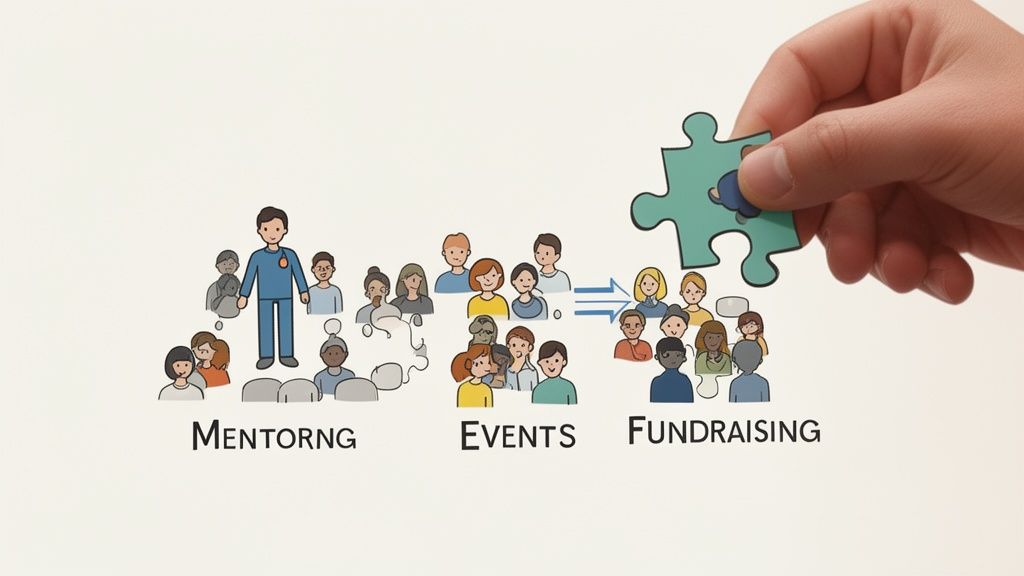
Ready to turn those good intentions into real action? Finding your place in the community isn't about some grand, time-consuming gesture. It’s about finding the right fit—an activity that works for your schedule and allows you to see the tangible results of your efforts.
I hear this from coaches all the time: “I need to see a return on my time. If I'm giving away my expertise, it needs to be strategic.” And that’s a completely fair and practical concern. The great news is that authentic community involvement is one of the best ways to build social proof, demonstrate your value, and generate warm, meaningful referrals for your business.
Modern, High-Impact Opportunities
Forget the old clichés of forced volunteering. Today’s opportunities are much more dynamic and can be tailored to your unique strengths. You can find ways to contribute that not only help your neighbors but also sharpen your professional skills in the process.
Think about mentoring a young entrepreneur who needs guidance on launching their first venture—this is a direct application of your coaching skills. Or perhaps you could join a neighborhood improvement committee, offering your strategic mind to help plan a new park or community garden. These actions put your expertise on full display in a non-salesy way.
A powerful way to get involved is by volunteering your coaching skills through local organizations or even online platforms. This approach creates massive ripple effects. For example, a business coach offering pro-bono sessions to a local Chamber of Commerce not only helps multiple small business owners but also positions themselves as the go-to expert in their town.
Get Involved with Pro Bono Coaching
For any coach, one of the most direct routes to making a community impact is offering your core services on a pro bono basis. This isn't just charity; it's a brilliant strategy for demonstrating your value and building a rock-solid local reputation.
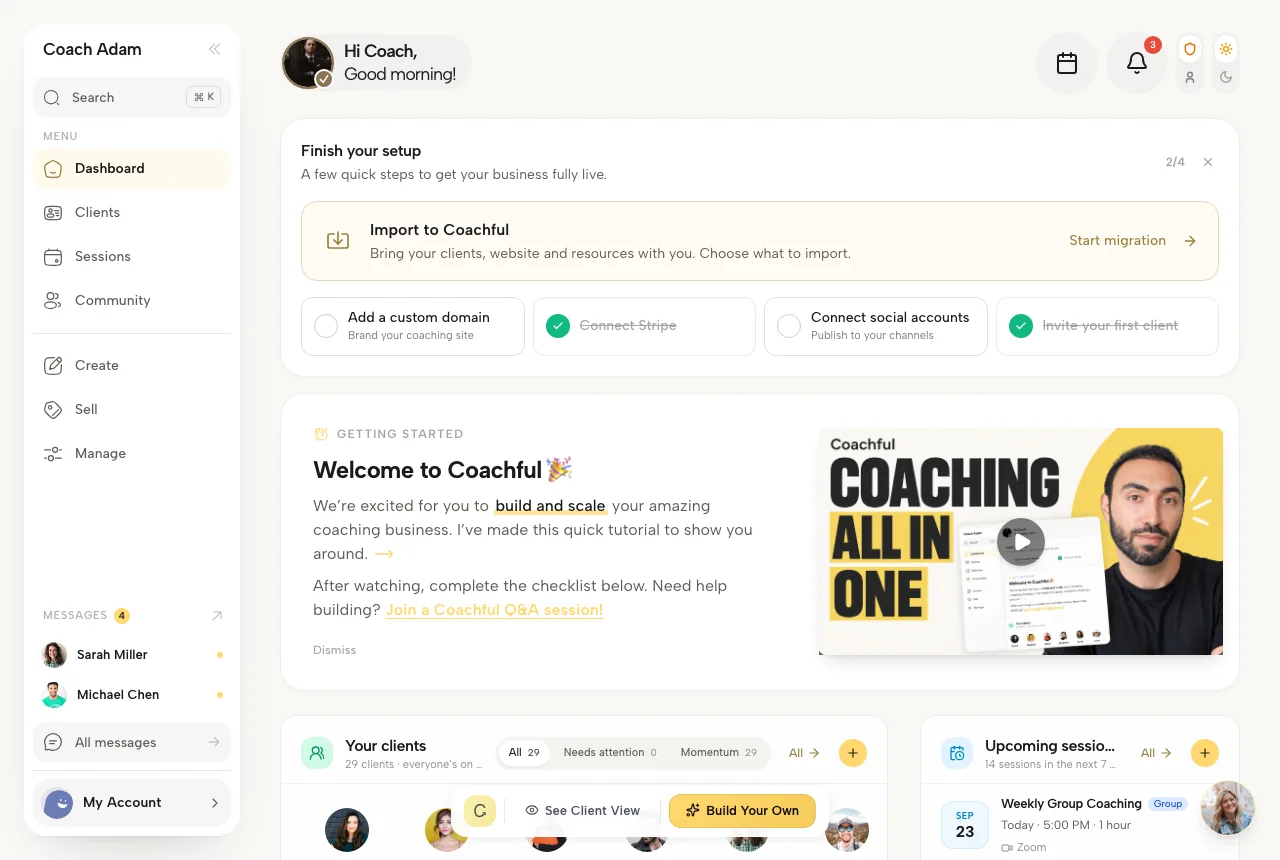
Imagine using a platform like Coachful to organize a small group coaching cohort for local nonprofit leaders. You could host focused sessions on fundraising strategy, team management, or preventing burnout—all critical needs in the social sector. This is a perfect "product-on-a-platter" you can offer.
- Track Your Impact: Use built-in dashboards to track the group's progress toward their goals. This gives you concrete data and testimonials to show the tangible results of your coaching.
- Organize Your Efforts: Manage schedules, share resources, and facilitate discussions all within one organized system. This makes the process incredibly efficient for both you and the participants, showing you respect their valuable time.
- Build Your Network: By helping community leaders succeed, you position yourself as a valuable local resource. This almost always leads to organic business growth and referrals down the line. It's the ultimate "show, don't tell" marketing.
This approach transforms your professional skills into a powerful tool for community betterment, with clear, measurable outcomes that benefit everyone. You could even adapt this model for an ongoing membership. If you're looking for ideas on how to structure something like that, you might find our guide on building a membership website helpful.
A Menu of Involvement Options
Not sure where to begin? Here’s a quick menu of ideas, ranging from low-commitment first steps to more involved roles. Pick one that feels exciting and genuinely achievable for you right now.
- Join a Neighborhood Social Media Group: This is often the easiest entry point. You’ll learn about local events, hear about neighbors in need, and discover volunteer opportunities you never knew existed. Just listen first, don't sell.
- Volunteer for a Single Event: Instead of a long-term commitment, sign up to help at a one-off event. Think a local festival, a charity 5K, or a park cleanup day. It’s a great way to meet people without any pressure.
- Offer Your Skills to a Small Business or Nonprofit: So many small organizations can’t afford professional help. Offer an hour of your time to facilitate a team meeting, review a strategic plan, or provide some coaching to their executive director.
- Join a Board or Committee: If you're ready for a deeper commitment, look into joining the board of a local nonprofit or a town committee (like the library or parks board). This is where you can have a direct influence on decision-making.
Ultimately, how you get involved is a personal decision. Start small, find an activity that aligns with your passions, and watch as your actions create meaningful change—for your neighbors, and for you.
Using Digital Tools to Amplify Your Impact
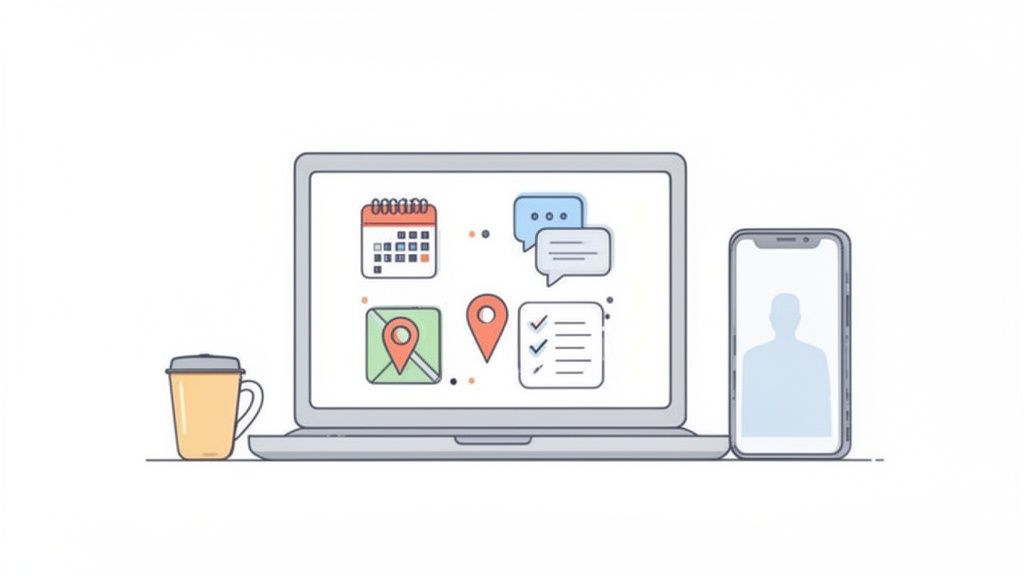
Let's be realistic—in today's world, finding time for community work can feel like a huge challenge. The idea of endless in-person meetings is enough to stop many of us before we even start. For any busy professional or coach thinking, "How can I possibly fit this in when my calendar is already bursting?", the answer is right at your fingertips. Smart digital engagement makes community involvement more accessible than ever. It’s all about working smarter, not harder, to connect with the local causes that matter to you.
Build Your Digital Community Hub
One of the most powerful moves you can make is to join or even start a dedicated online group for a local initiative. I've seen this work wonders. Think of a simple Facebook group for a neighborhood cleanup project or a Slack channel for volunteers at a local animal shelter. These spaces quickly become the central command for communication, planning, and getting things done.
For coaches, platforms like Coachful can elevate this idea. Imagine creating a private, focused space to organize a community project, manage all your volunteer communications, and even schedule virtual skill-sharing sessions. A business coach, for instance, could host a monthly virtual "power hour" on marketing for local small business owners—all managed through one platform. It's a fantastic way to scale your expertise and make it widely accessible, proving your value to a larger audience.
This isn't just a fleeting trend. Joining or starting online communities is a modern, effective way to get involved. The global community engagement software market was valued at USD 2.88 billion in 2024 and is projected to hit USD 3.58 billion by 2034. That kind of growth, reported by Zion Market Research, points to a massive demand for platforms that help us connect and contribute transparently. People want to be involved efficiently.
Scale Your Contribution Efficiently
Digital tools are your secret weapon for making a big impact without getting buried in administrative busywork. They help you automate, organize, and amplify your efforts.
Here's how you can put this into practice:
- Offer Virtual Skill-Sharing: Share your professional expertise without ever leaving your office. As a coach, you could host a webinar on "Beating Burnout" for local healthcare workers or a session on "Effective Goal-Setting" for high school students.
- Centralize Your Communication: Ditch the messy email chains. A dedicated platform keeps everyone in the loop and ensures important information doesn't get lost in someone's inbox. This models the professionalism you bring to your paid work.
- Automate Reminders: For coaches using tools like Coachful, automated reminders for meetings or deadlines are an absolute lifesaver. This simple feature keeps projects on track and shows you respect everyone's time—a critical point, considering 82% of residents want meaningful follow-up from community initiatives.
If you're curious about the nitty-gritty of creating these kinds of engaged online spaces, our guide on building an online community is a fantastic starting point. It breaks down the essential steps for creating a vibrant, purposeful group from scratch.
By weaving these digital strategies into your approach, you can turn your desire to help into focused, efficient action. You’ll save time, extend your reach, and see a measurable difference in your community.
Shaping Your Town's Future Through Local Decisions
Volunteering is great, but what about influencing actual policy? That feels powerful. Yet, so many of us shy away from local politics. We hear that little voice in our head saying, “It’s too complicated. My opinion won’t really be heard. I'm a coach, not a politician.”
Here’s the thing: you can shift from simply being in your community to actively shaping its future.
The truth is, your coaching skills are desperately needed in these decision-making forums. Think about it. You’re already a pro at facilitation, strategic planning, and keeping people on track toward a goal. Those are the exact skills that can turn a chaotic public meeting—where everyone is just yelling their own opinion—into a productive session where real change actually happens.
What Is Participatory Budgeting?
Imagine your town has a pot of money set aside for a new public project. Instead of a small group of officials deciding where it goes, the entire community gets to brainstorm ideas, develop proposals, and vote on what gets funded. That’s participatory budgeting in a nutshell.
It’s a democratic process giving residents a direct say in how public money gets spent. This isn't some fringe idea; it's a growing global movement making local government more transparent and citizen-led.
The data backs this up. A recent analysis found that tools for participatory budgeting saw a 45% jump in use across Australia and New Zealand since 2024, largely because of new policies demanding more accountability. And globally, with 71% of residents saying transparency is their top priority in local decisions, the momentum is clear. You can get a deeper look at these trends in the 2026 year-in-review from Social Pinpoint.
Your Coaching Skills in Action
This is where you, as a coach, can really shine. Your knack for guiding conversations and clarifying goals is invaluable here. You can step into a role that goes far beyond just casting a vote.
Here's how you can make a real difference:
- Facilitate Brainstorming Sessions: You can help a group of neighbors turn a vague idea like "we need more green space" into a concrete, actionable proposal with clear objectives and timelines. You're the one asking, "What does success look like for this project?"
- Guide Strategic Planning: Use the goal-setting frameworks you already know to help a project group define its vision, map out key milestones, and figure out budget needs. You're basically coaching the community itself.
- Track and Report Progress: If you use a platform like Coachful, you can even apply its principles. Help a committee track progress, manage its to-do list, and report outcomes back to the community, building trust and momentum.
By stepping into this space, you aren't just getting involved in your community; you're taking a seat at the table where real decisions are made. You become the person who helps turn public feedback into tangible improvements—a new playground, a community art installation, or better street lighting. That's a powerful story to tell.
Don't let the word "politics" scare you off. Processes like participatory budgeting are designed to break down those old barriers and empower residents. Your voice, guided by your professional skills, can be an incredible force for building a better town for everyone.
A great first step is to look up your local town or city council's website. See what information they have on public meetings or citizen committees.
Answering Those Last-Minute Questions
Even when you're fired up and ready to go, it's completely normal for a little voice of doubt to creep in. That last-minute hesitation can be just enough to stop you from taking that first, crucial step. Let’s get those final worries out of the way so you can dive in with confidence.
Think of this as a quick, practical chat to tackle the real-world concerns that often keep busy coaches and professionals on the sidelines.
How Much Time Do I Really Need to Commit?
This is the big one, isn't it? That inner dialogue: "I'm already working 50 hours a week. If I commit to something, I'll let them down." The fear of getting sucked into a black hole of endless meetings is real. But the honest answer is, it’s much less than you probably think.
Consistency beats intensity, every time. A focused hour or two a week makes a much bigger splash over the long run than a short, intense burst of effort that leads to burnout. It's far better to be a reliable, long-term contributor in a small role than a short-lived hero in a big one.
Start small. Pick one thing and do it well.
- For a Coach: Offering just one pro bono strategy session a week might not sound like a lot, but that adds up to over 50 hours of expert guidance for your community in a year. That is a massive contribution.
- For a Professional: Spending 20 minutes a day managing a local group’s social media provides a consistent, valuable service that keeps everyone connected and informed.
Are There Ways for Introverts to Get Involved?
Absolutely. The inner voice says, "I hate networking events. The thought of a town hall meeting gives me anxiety." Community building isn't just for the outgoing person who loves running meetings. In fact, some of the most critical roles are played behind the scenes, where deep focus and thoughtful work are the real keys to success. It's all about matching the opportunity to your natural strengths.
You don't have to be the loudest voice in the room to make a difference. In fact, the quiet, consistent work done behind the scenes is often what keeps community initiatives running smoothly and effectively. Your ability to think deeply and strategically is a huge asset.
If you're an introvert wondering how to get involved in your community, consider roles like these:
- Writing and Editing: Local nonprofits always need help drafting grant proposals, writing newsletters, or just proofreading important communications. This is focused, high-impact work.
- Logistics and Organization: Put your organizational superpowers to use! You could manage the volunteer schedule for a community garden or coordinate a donation drive using a simple spreadsheet.
- Digital Support: Offer to update a website, moderate an online forum, or analyze data for an advocacy group. These jobs are incredibly valuable and can often be done from home in your own time.
How Do I Know if an Organization Is Legitimate?
This is a smart question. Your inner coach is thinking, "I need to vet this. I'm not going to attach my name and reputation to a poorly run organization." You're investing your time and energy, and you deserve to know it's going to a reputable cause. Doing a little homework upfront can save you a world of frustration later on.
First, do a quick digital check-up. A legitimate organization will almost always have a professional-looking website and active social media channels that clearly explain their mission and show their work in action.
Next, look for signs of transparency. Good nonprofits aren't shy about their impact. They'll often post annual reports, financial statements, or impact summaries on their websites to show they're accountable to their community. Look for clarity and data.
Finally, just talk to someone. Reach out and ask for a quick chat with a program director or even a current volunteer. A great organization will be proud to tell you what they're all about.
Try asking a few direct, coach-like questions:
- "How do you measure the impact of your work?"
- "Can you share a recent success story that you're proud of?"
- "What are the biggest challenges you're facing right now, and how are you addressing them?"
Their ability—and willingness—to answer these questions with clarity and honesty will tell you everything you need to know about their legitimacy and effectiveness.
Feeling ready to turn your skills into community action? Coachful gives you the perfect platform to organize pro bono group sessions, manage projects, and track your impact, all in one place. See how you can build a stronger community—and a stronger practice—by visiting https://coachful.co.